Building or extending without a soil survey is a risky gamble, particularly in the Alpes-Maritimes and Var where clay soils, backfill, and sloped land are common. Foundations are the most critical part of any construction project: a mistake at this stage is nearly irreversible and costly.
Load-bearing wallStrip footingBearing soil (sound soil) Load-bearing wallStrip footingBearing soil (sound soil)
Why a Soil Survey Is Mandatory
Since the 2018 ELAN law, a preliminary geotechnical survey (G1 mission) has been mandatory for any sale of buildable land in zones with moderate to high exposure to clay shrink-swell risk. A design study (G2 mission) is required in high-risk zones before construction. These studies determine the nature of the soil, its bearing capacity, and the appropriate foundation design. Ignoring them exposes the building to undersized or unsuitable foundations.
The Most Serious Foundation Errors
- Insufficient depth: foundations laid on soft soil or unstabilized backfill.
- Inconsistent foundations: different depths across the same building, causing differential settlement.
- Missing reinforcement or misplaced rebar in footings.
- Untreated soil: building on uncompacted backfill, a clay pocket, or a water table.
- Insufficient anchoring on sloped ground: risk of landslip.
Signs of a Foundation Problem
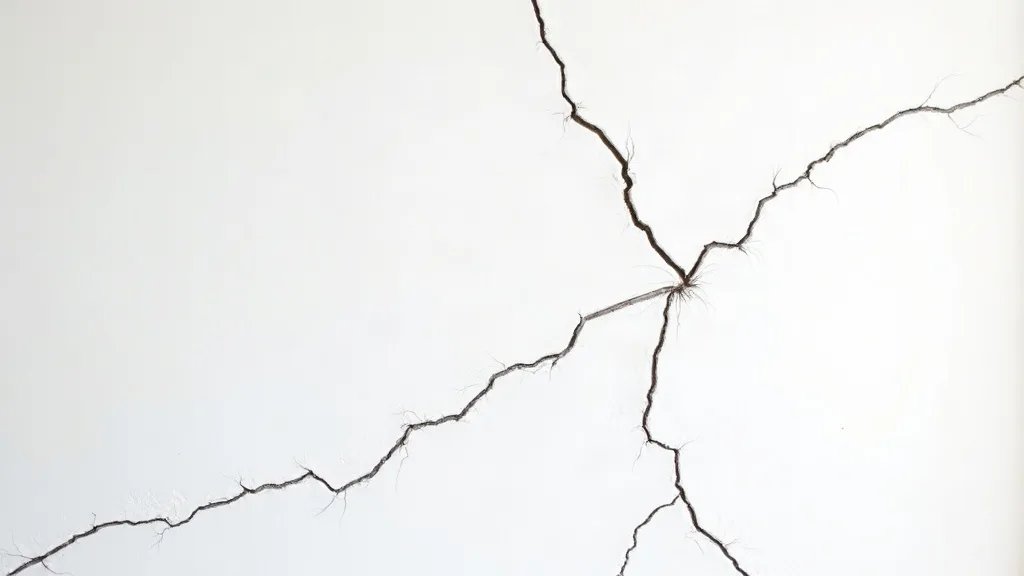
- Cracks in a stair-step pattern or running through the wall on load-bearing walls.
- Settlement of the slab or floors.
- Doors and windows that stick or no longer close.
- Separation between walls, or between an extension and the main structure.
- 45\u00b0 cracks radiating from window or door corners.
Diagnosis and Solutions
When these signs appear, the building expert carries out a foundation diagnosis (borings, inspection, sometimes an additional soil survey) to determine the origin of the issues. Solutions range from underpinning (reinforcement using piers or micropiles) to soil stabilization (resin injection, drainage). To understand how serious cracks are, see our article on structural vs. superficial cracks. A foundation issue affecting structural soundness falls under the ten-year structural warranty. In case of poor workmanship by the mason or builder, the procedure is detailed in defects found during construction.
\ud83d\udcc5 Updated 3 August 2026 \u2014 By Cassini Expertise, independent building expert for the Alpes-Maritimes & Var. Free quote: 04 22 46 06 04.
To find out more:
Frequently Asked Questions
What are the signs of a foundation built without a soil survey?
Signs include diagonal or stair-step cracks on walls, doors and windows that stick or jam, slabs that lift or sink, and localized ground subsidence around the building. These symptoms often appear after moisture changes or periods of drought.
What are the consequences of building without a soil survey?
The main consequences are differential ground settlement that can cause irreversible structural damage, a drop in property value, disputes with insurers, and high repair costs. In risk-prone areas (clay, sand), this can lead to instability of the entire structure.
How can foundations built without a soil survey be repaired?
Repair first requires a geotechnical assessment to determine the cause. Depending on the diagnosis, solutions may include resin injection, micropiles, underpinning, or the addition of drains. It is essential to consult an expert engineering firm before any intervention.
Cassini Expertise
Expert du bâtiment indépendant — Antibes (06·83·13·40)
📅 Mis à jour le 25/09/2026 — Cassini Expertise, expert bâtiment indépendant (06·83·13·40).