The essentials. About 100 m² flat on the first floor of a condominium, Antibes (06). Widespread mould – ceilings, woodwork, cupboards, clothing – making the home unusable. The survey rules out misuse and identifies three causes of collective origin: a probable leak in the rainwater downpipe, chronic condensation on the central cooling network, and an extraction system delivering no airflow. The loss originates in the common parts.
The context
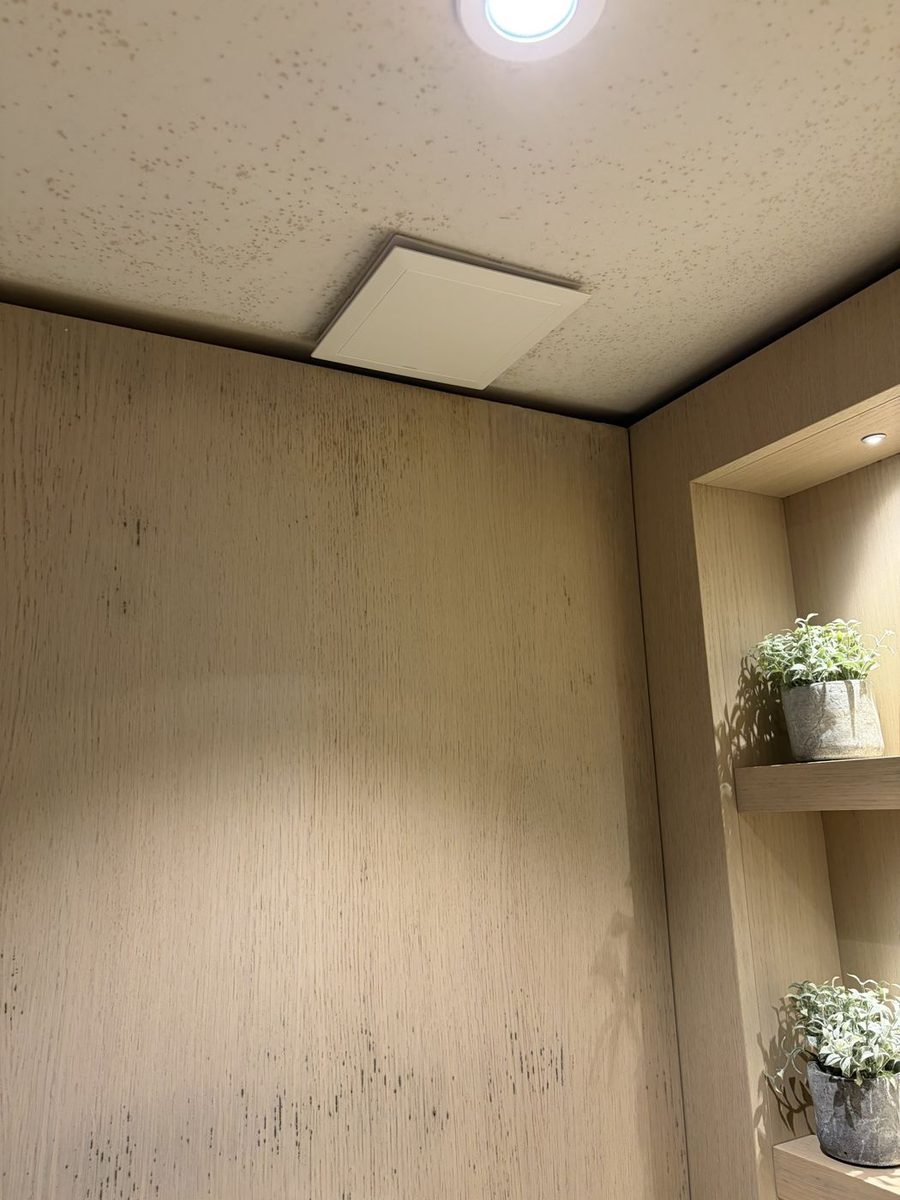
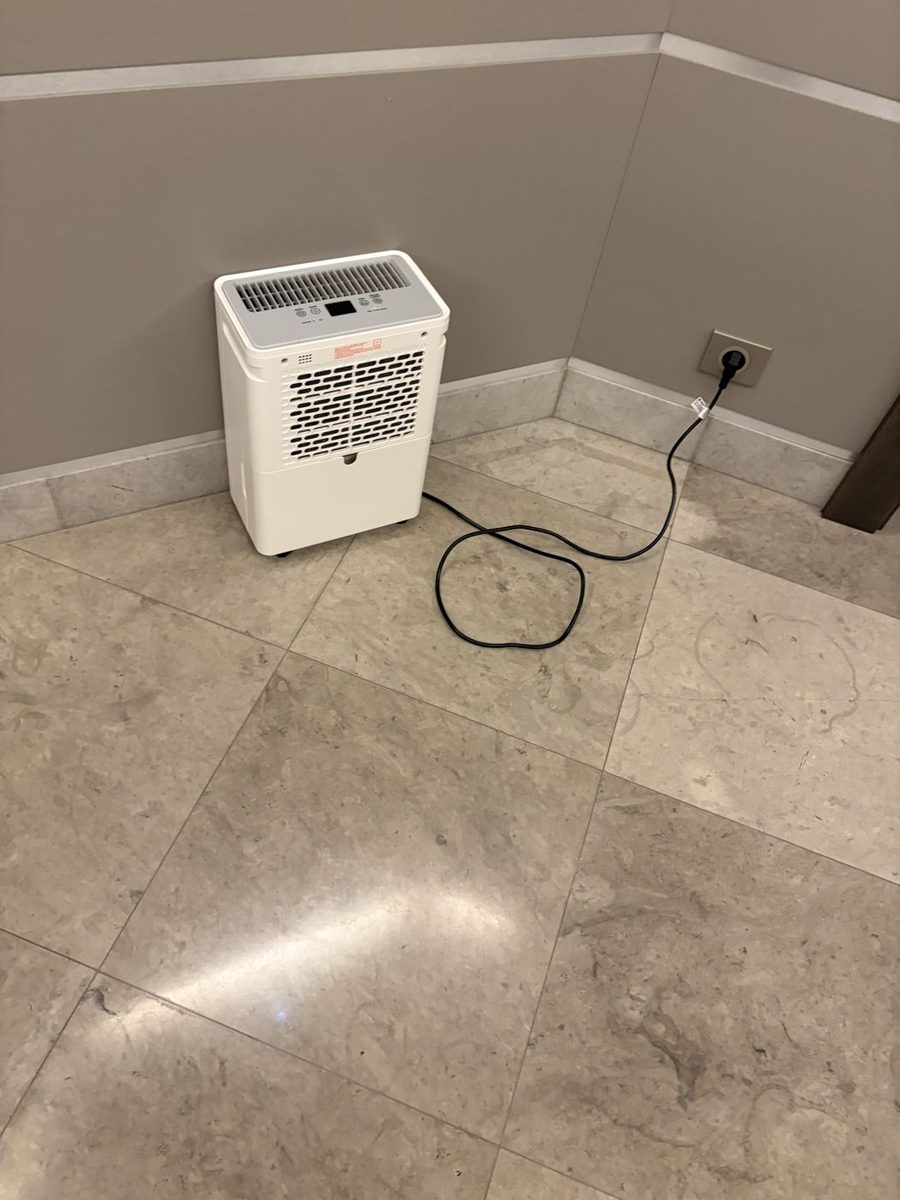
An owner finds his flat – on the first floor of a condominium building – covered in mould: diffuse spotting on the ceilings, brown pinpoint clusters around hatches and extraction vents, black streaks on woodwork, whitish blooms on textiles shut inside cupboards. A claim has been declared with his insurer; the agency managing the property has placed a dehumidifier and a fan heater as a stopgap. The home is no longer used in its current state.
The question posed
Where does the moisture come from? Is there a leak? Who is responsible – the flat or the building? The mission: identify the origin, record and assess all the damage, and guide the owner through the process. One pointer emerged early: according to the building caretaker, every flat on the first floor suffers recurring mould. Recurrence across an entire level points to a common cause, not to the occupants’ use of one particular flat.
How the inspection went
Room by room, with access – thanks to the caretaker – to the upper terraces and the shared plant room. The measurements: comparative moisture readings on walls with a ball-type moisture meter, ambient hygrometry with a thermo-hygrometer, and above all air velocity at the extraction vents with a vane anemometer, with and without the grille. One reservation was stated up front: the windows had been opened during the visit, so the ambient humidity measured is not representative of normal occupancy – only the wall readings count.
Key findings
Mould down to the cupboards
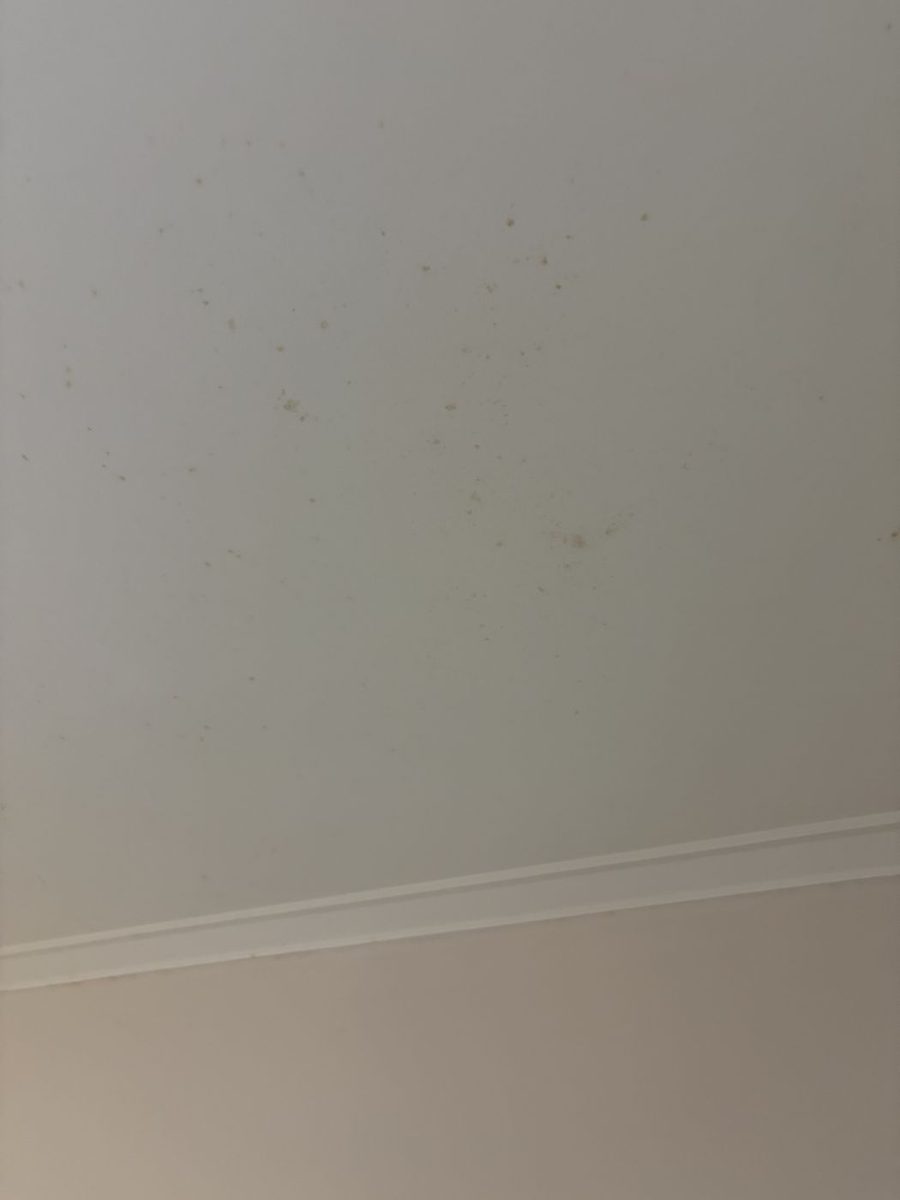
The fungal growth is generalised: ceilings studded with brown pinpoints, sharpest around the extraction vents, greenish halos on the bed linen, whitish mould on luggage and clothing stored in cupboards. Spreading into enclosed spaces is the signature of air permanently loaded with moisture – not of a one-off incident.
The rainwater trail: blocked overflow, blackened timber
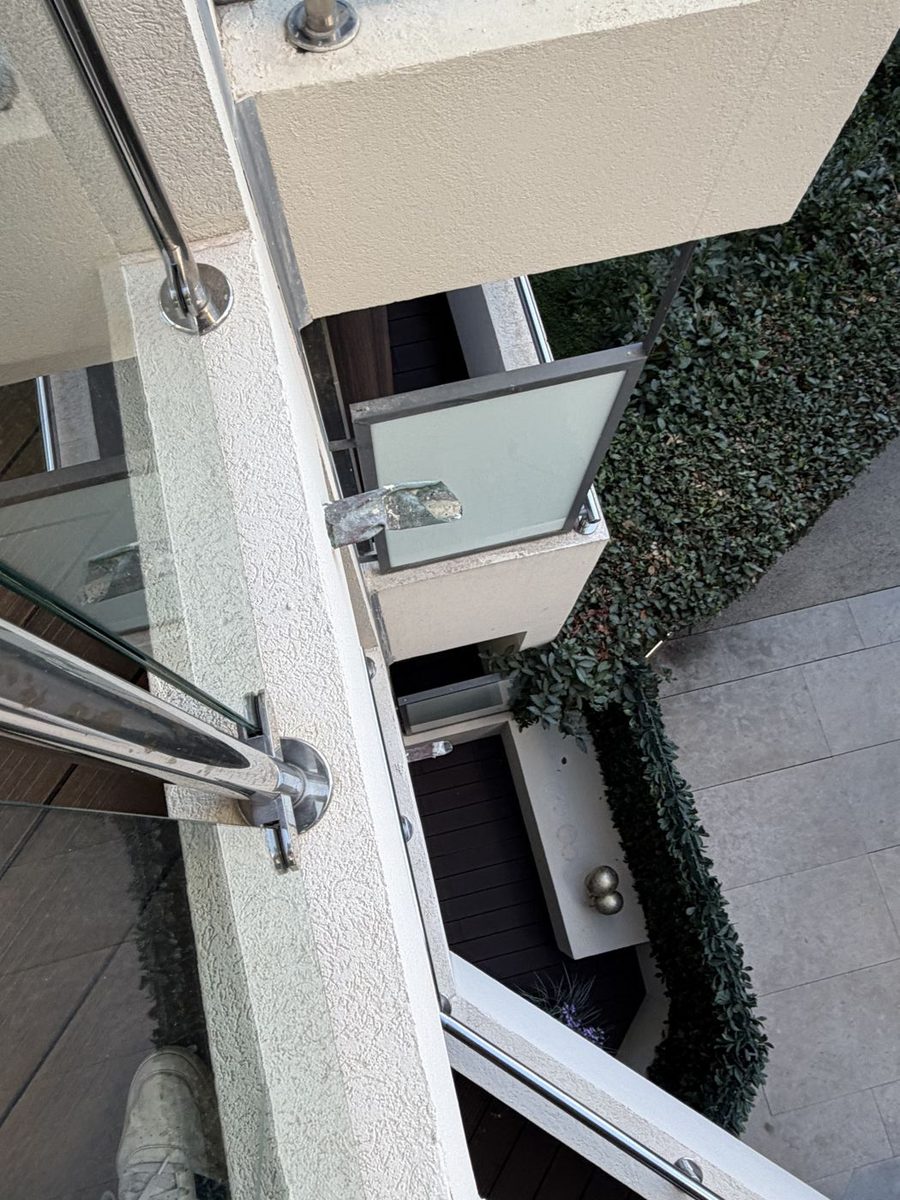
On the terrace, the scupper (barbacane) that drains rainwater is blocked; the neighbouring one is warped and out of service. At the foot of the timber trims of the terrace doors, the wood is blackened, softened, marked with whitish deposits: such decay does not follow a single rainy episode – it evidences old, repeated ponding. From the upper terrace, examining the rainwater downpipe at the scupper revealed a probable leak, with water migrating through the slab – the very slab that forms the ceiling of the most contaminated bedroom.
An extraction measured at zero
The decisive finding sits there: 0.00 m/s at the extraction vent with its grille on – the real-life configuration. A velocity could only be obtained with the grille removed, which is not representative. The French order of 24 March 1982 requires 15 to 30 m³/h of extraction depending on the room; moisture produced in, or brought into, the flat is simply never evacuated.
Condensation on the collective cooling network
In the shared plant room, visited with the caretaker: three significant mould traces directly at three pipes of the central cooling network. Pipework carrying chilled water condenses ambient humidity on its surface when the insulation is missing, damaged or discontinuous: each trace is a permanent moisture input into the volumes crossed – consistent with the recurring mould reported across the whole first floor.
Analysis and deliverable
The report concludes that there is a combination of three causes of collective origin: the probable leak of the rainwater downpipe at failed scuppers, condensation on the central cooling network, and near-inoperative extraction that prevents any evacuation. These works belong to the common parts: their maintenance and repair fall to the owners’ association (syndicat des copropriétaires). Nothing found points to misuse by the occupant – palliative measures were in fact in place. The report recommends keeping the premises untouched until joint expert assessments – the contaminated ceiling is the material proof of the link to the common works -, writing to the managing agent about whether a structural-warranty claim has been declared, and taking legal advice before any intervention. A timing warning is flagged: the ten-year warranty runs from completion of the works, and its exact date must be verified.
What this case illustrates
Faced with mould, intuition often blames the occupant – not airing enough, lifestyle. Measurements reverse the picture: a vent at zero, blocked scuppers and failed insulation are facts, located in the common parts, and they engage the condominium. See also our damp and mould diagnosis page, our second-opinion survey service, and our other case study on a defects survey in Mandelieu.
See also: damp converted basement – Villeneuve-Loubet · substandard rental home – Lucéram
Does your situation look like this case?
Every case is different. Describe yours: an independent building expert replies within 24 hours, with no obligation. A first consultation by video call is available.
Names, address and sensitive data anonymised; photo metadata removed. Provided for illustrative purposes only; not advice for your own situation.
“I wish to thank Mr Faucouneau for his professionalism, thoroughness and the quality of his work. Expert report delivered in both French and English.”
— V.G., owner, Antibes · Mould expertise in co-ownership · November 2026
📅 Last updated 02/11/2026 - Cassini Expertise, independent building expert – departments 06, 83 and 13.