CONSTRUCTION — DEFECT
You step onto a terracotta tile and it wobbles under your foot. In Nice, under the arcades of the Promenade, the tiling simply won’t hold. Tile detachment on new-build sites, within two years of installation, remains one of the most common complaints. You typed « tile coming loose adhesion test standard » into Google. Welcome — let’s measure it, calculate it, and find out whether your installation meets code.
What you see — and what it’s really hiding
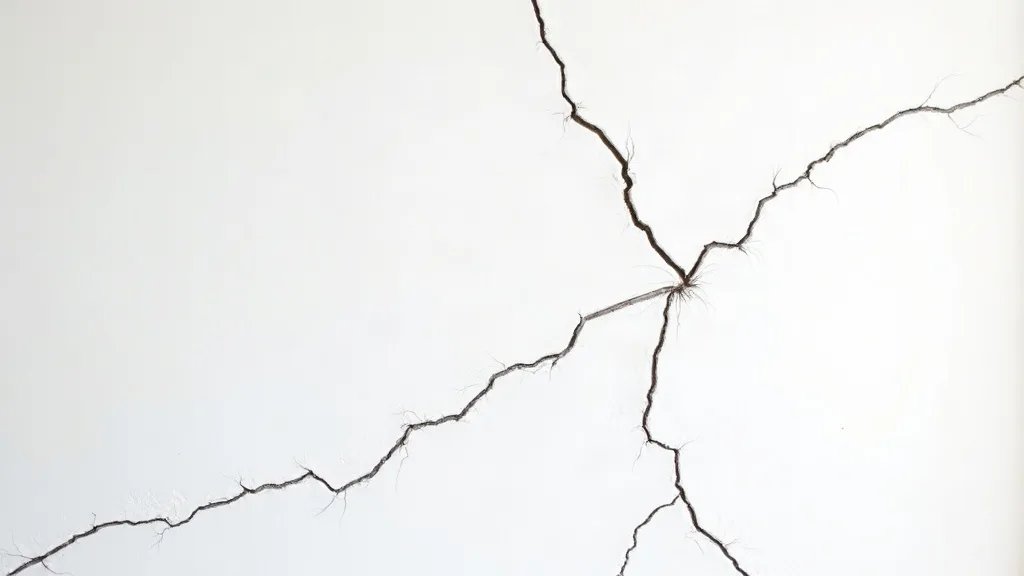
A tile rings hollow when you tap it. Sometimes a crack forms in an X shape. You scrape at the grout and it crumbles to powder. The developer says « that’s normal, the building is settling. » But in Nice, on the hills of Cimiez, ground made of expansive clay or karstic limestone shifts differently. Here’s what no one tells you: a tile that sounds hollow over more than 20% of its surface is an adhesion defect. Field experience regularly shows tiles coming loose within the first few months when the adhesive never cured properly. The adhesive simply never bonded.
The adhesion calculation that changes everything
The NF DTU 52.1 standard requires a direct pull-off adhesion test. A metal disc is bonded to the tile, then pulled perpendicular to the surface using a dynamometer. Adhesion strength is calculated as σ = F / A, where A is the surface area of the disc (50 mm diameter => A = 1963 mm²). The minimum threshold for indoor bonded tiling is 0.5 MPa. A measured force of 650 N illustrates a case of non-compliance. That gives σ = 650 / (1963×10⁻⁶) = 0.33 MPa. Result: non-compliant. What does that mean in practice? The tile detaches under a load of just 65 kg. A kitchen cabinet or regular foot traffic is enough to lift it.
What happens if you do nothing
Six months later, three tiles sound hollow. Within a year, an entire row lifts up. Moisture seeps up through the grout lines and the substrate crumbles. In Nice, with the sea air and temperature swings, deterioration speeds up. It’s not uncommon to see an entire living room needing to be redone for €8,000, not counting months of disruption. And if the defect stems from a workmanship error (poor adhesive application, unprepared substrate), the ten-year structural warranty (garantie décennale) may apply. But you still need to prove non-compliance.
How to get an expert assessment and assert your rights
If you notice tiles coming loose in Nice or anywhere in the Alpes-Maritimes, the first step is to have an adhesion test carried out by an independent expert. Cassini Expertise works throughout Antibes, Cannes, and the entire Côte d’Azur. We use a calibrated dynamometer and strictly follow the NF DTU 52.1 standard. The expert report will serve as evidence for a decennial warranty claim or mediation with the builder. Don’t wait for the damage to spread — an early diagnosis can save you significant costs.
What I regularly see in the field
One homeowner had tiles sounding hollow in the kitchen. The builder claimed it was a maintenance issue. After a pull-off test, the measured adhesion strength was 0.28 MPa, well below the required threshold. The report secured coverage under the ten-year structural warranty. Another case in Antibes: outdoor tiling came loose after a rainy winter. Moisture had weakened the adhesive. The test showed near-zero adhesion. Conclusion: poor substrate preparation.
Contact an expert for your tiling issue in Nice
Not sure whether your tiling is properly bonded? Call on Cassini Expertise for a reliable diagnosis. We work quickly across Nice, Antibes, Cannes and the wider PACA region. Request your free quote today.
📅 Updated 09/01/2026 — By Cassini Expertise, independent building expert serving departments 06 & 83. Free quote: 04 22 46 06 04.
To go further:
Frequently asked questions
Why are my tiles coming loose in Nice?
Tile detachment in Nice is often caused by poor adhesion linked to moisture, excessive heat, or inadequate substrate preparation. An adhesion test carried out to the DTU 52.1 standard checks the strength of the bond and identifies at-risk areas.
How do you test tile adhesion under DTU 52.1?
The test involves bonding metal discs to the tile with resin, then pulling them off with a tensiometer once cured. The measured pull-off force must exceed 0.5 MPa to guarantee proper adhesion; otherwise, the installation must be redone. In case of non-compliance, the party responsible for the installation (client or contractor) must repair or replace the affected areas.
What does a tile adhesion test cost in Nice?
Generally, the cost of a professional adhesion test in Nice ranges from €150 to €300, depending on the surface area and number of test points. This diagnostic is essential for determining whether a partial repair or a full removal and re-installation is needed.
Cassini Expertise
Expert du bâtiment indépendant — Antibes (06·83·13·40)
📅 Mis à jour le 25/09/2026 — Cassini Expertise, expert bâtiment indépendant (06·83·13·40).