Introduction: what’s at stake with party walls in the Alpes-Maritimes and Var
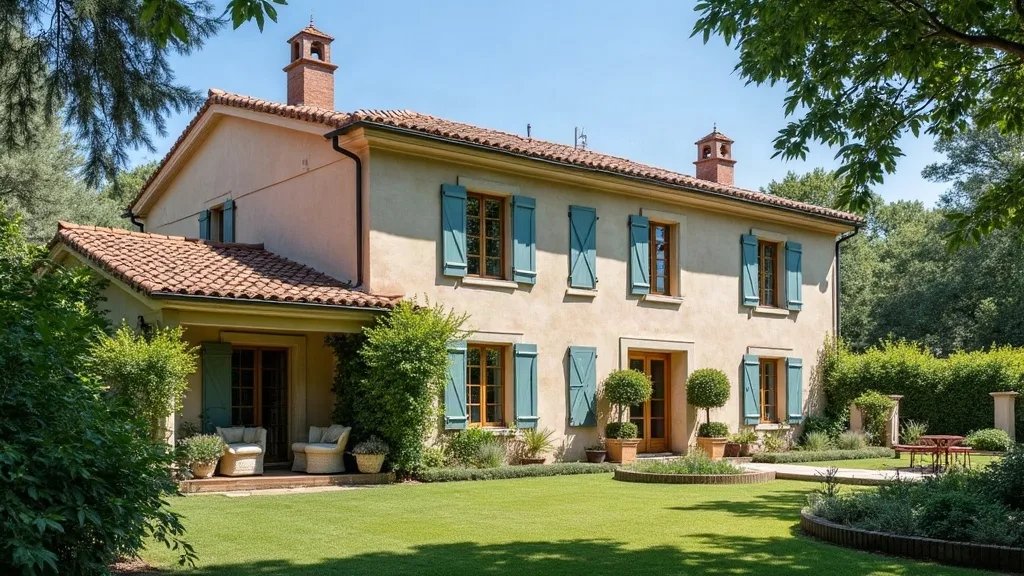
In the Alpes-Maritimes (06) and the Var (83), questions of party walls and rights of way sit at the heart of disputes between neighbours. Whether you own property in Antibes, Cannes, Grasse, Nice or Toulon, understanding the rules is essential to avoid conflict and secure your property transactions. This technical article covers the key points, up to date as of August 2026.
What is a party wall?
A wall is described as a party wall when it separates two buildings or two yards and is owned jointly by both owners. The presumption of joint ownership is set out in Article 653 of the French Civil Code, but it can be rebutted by title deeds or external markers (for example, a sloped coping stone).
- Simple presumption: in the absence of evidence to the contrary, a dividing wall is presumed to be a party wall.
- Evidence to the contrary: a notarial deed, old plans, or physical markers (e.g. corbels, tie anchors) can establish sole ownership.
- Rights and obligations: each co-owner may use the wall but cannot build against it without the other’s consent, nor create openings without respecting the legal distances.
Right of way: definition and conditions
A right of way is a burden placed on one plot of land (the servient land) for the benefit of another (the dominant land). It can arise from the law (landlocked property), a title deed, or the « destination du père de famille » doctrine. In the property market of southeastern France, sloped plots and landlocked parcels are common, which makes these rules especially important.
- Landlocked property: if your property has no access to a public road, you can demand a right of way over neighbouring land, with compensation proportional to the harm caused.
- Right of way by title: the passage is defined in a notarial deed, specifying its location, width, and maintenance terms.
- Extinction: the right of way ends if the plots are merged, or if it goes unused for 30 years (for non-continuous rights of way).
Local specifics: the 06 and 83
In the Alpes-Maritimes and the Var, the terrain and urban density — particularly along the French Riviera — make party wall and right of way issues especially sensitive. Buildings on the property boundary are common, and disputes frequently involve encroachment, rainwater drainage, or the upkeep of retaining walls.
In Nice or Toulon, for example, boundary walls are often party walls, and repairing them requires the neighbour’s agreement. In Antibes or Grasse, rights of way granting access to elevated plots are common. A topographic survey helps verify the actual boundaries and resolve any ambiguity.
Practical advice for property owners
- Before buying: have title deeds and cadastral plans checked by a planning/land expert.
- In case of a dispute: favour mediation before taking legal action.
- For any construction: respect the legal distances (3 metres for direct views, 1.90 metres for oblique views).
- Maintenance: a party wall must be maintained at shared cost; if a neighbour causes damage to it, they are liable.
Call in a building expert and surveyor
Given these stakes, involving a building expert and surveyor is often decisive. Cassini Expertise, based in the Alpes-Maritimes, works throughout the 06 and in the Var (83) to carry out topographic surveys, boundary markings, and party wall assessments. Our technical reports serve as evidence in disputes and help smooth property transactions.
Conclusion: plan ahead with Cassini Expertise
Whether you’re in Nice, Cannes, Antibes, Grasse or Toulon, understanding the rules on party walls and rights of way is essential. To secure your project, call Cassini Expertise on 04 22 46 06 04. We offer a free quote for any assignment in the Alpes-Maritimes (06) and the Var (83).
📅 Updated 17/08/2026 — By Cassini Expertise, independent building expert for the 06 & 83. Free quote: 04 22 46 06 04.
To go further:
Frequently asked questions
What distance is required for a building on a shared boundary?
In urban zones, if the local land-use plan (PLU) does not specify otherwise, you may build right up to the boundary. In rural areas or outside a PLU, keep a minimum distance of 3 metres from the boundary, unless you have the neighbour’s written agreement.
How do I obtain a right of way if my property is landlocked?
If your land is landlocked, you can request a legal right of way. First consult a surveyor to establish a certificate confirming the land is landlocked, then offer compensation to the owner of the servient land. If they refuse, you can bring the matter before the judicial court.
Can a party wall be built without the neighbour’s consent?
No, building a party wall requires the neighbour’s written consent. You can also build a wall entirely on your own side of the boundary, but it will then be privately owned and must comply with planning rules. If there’s a disagreement, legal recourse is available.
Cassini Expertise
Expert du bâtiment indépendant — Antibes (06·83·13·40)
📅 Mis à jour le 25/09/2026 — Cassini Expertise, expert bâtiment indépendant (06·83·13·40).