Structural cracks: when should you worry?
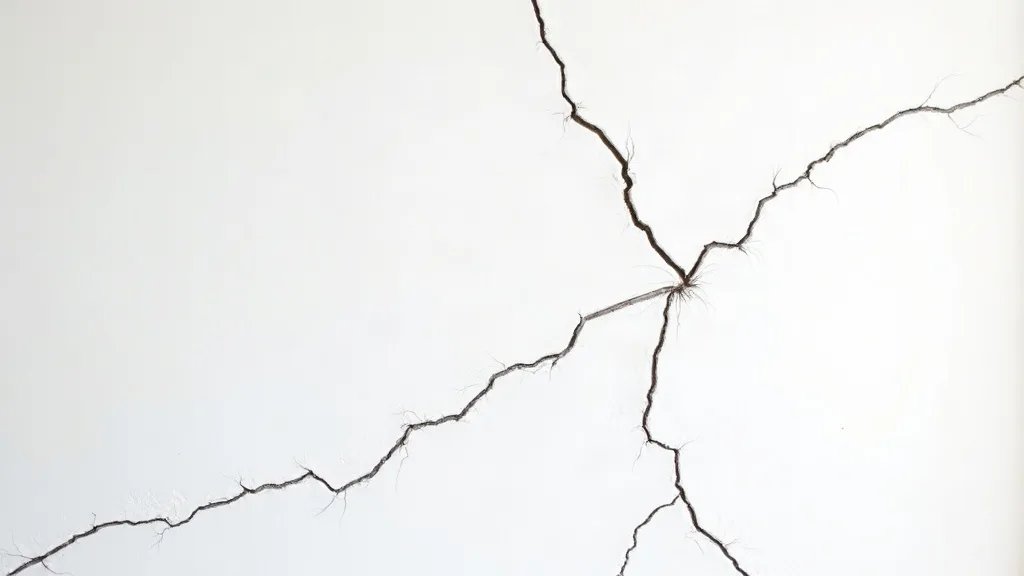
Cracks in a building are a frequent source of concern for property owners. Not all of them warrant an expert assessment, but some require prompt intervention. Distinguishing between structural cracks (affecting the soundness of the structure) and surface cracks (cosmetic) is essential for determining the severity of the issue and the appropriate course of action.
Classifying cracks by severity
Building experts generally classify cracks according to their width (opening):
- Microscopic cracks (< 0.2 mm): Not a concern, purely cosmetic. Seen on renders and paintwork.
- Fine cracks (0.2 to 1 mm): May indicate slight differential settlement. Monitoring is recommended.
- Medium cracks (1 to 3 mm): Often caused by ground movement or construction defects. Technical assessment advised.
- Wide cracks (> 3 mm): Indicative of structural disorders. An expert assessment is essential.
- GTR — Technical guide to drainage networks in PACA (06-83)
- Asbestos and lead: pre-works diagnosis in the 06 and 83
Causes of structural cracks
Structural cracks can have multiple origins:
- Ground movement: Differential settlement, expansive clays, shrink-swell, drought/natural disaster.
- Design flaws: Undersized foundations, missing expansion joints, poor allowance for loads.
- Construction defects: Poor concrete placement, insufficient reinforcement, absence of tie beams.
- Weather-related stress: Freeze-thaw cycles, excessive heat, humidity fluctuations.
- Abnormal loading: Nearby works (foundations, excavations), operational overloads.
- GTR — Technical guide to drainage networks in PACA (06-83)
- Asbestos and lead: pre-works diagnosis in the 06 and 83
Technical diagnosis of structural cracks
The independent expert applies a rigorous methodology to diagnose the origin of the cracks:
- Topographic survey: Level measurements to detect settlement.
- Crack monitoring: Tracking crack evolution over time (progressing? stable?).
- Core sampling: Analysis of concrete quality and reinforcement.
- Geotechnical investigations: Soil study (pressuremeter tests, boreholes).
- GTR — Technical guide to drainage networks in PACA (06-83)
- Asbestos and lead: pre-works diagnosis in the 06 and 83
Structural cracks and legal warranties
Structural cracks fall under the 10-year statutory warranty (décennale) from the date the building is handed over. If the origin is a hidden defect affecting the soundness of the structure, the builder is required to repair it at their own expense. In the event of a dispute, an independent expert assessment can determine:
- Whether the crack is structural or superficial.
- Whether the origin lies with the builder, the design, the loading, or the soil.
- The liabilities involved (builder, architect, engineering firm).
- The cost of repairs (local repair or underpinning).
- GTR — Technical guide to drainage networks in PACA (06-83)
- Asbestos and lead: pre-works diagnosis in the 06 and 83
Surface cracks: treatment and prevention
Surface cracks, while less serious, still deserve attention:
- Renders: Cracks caused by excessive thickness, rapid drying, or the absence of a base coat. Localised repair.
- Paintwork: Cracks caused by inadequate surface preparation or application on a damp surface.
- GTR — Technical guide to drainage networks in PACA (06-83)
- Asbestos and lead: pre-works diagnosis in the 06 and 83
Cracks in the PACA region: specific factors
The geological and climatic context of the PACA region favours the appearance of cracks:
- Expansive clays: At-risk areas (Var plain, Grasse region). Ground movement that can crack foundations.
- Seismic zones 3-4: Seismic accelerations that can cause cracks, even moderate ones.
- Mediterranean rainfall: Significant fluctuations in soil moisture.
- GTR — Technical guide to drainage networks in PACA (06-83)
- Asbestos and lead: pre-works diagnosis in the 06 and 83
Frequently asked questions about cracks
Does every crack warrant an expert assessment?
No. Only wide cracks (> 3 mm), those that are actively progressing, or those accompanied by other issues (a sticking door, cracked glass) require an expert assessment.
Does a structural crack always fall under the 10-year statutory warranty?
Yes, as soon as it affects the soundness of the structure or renders it unfit for its purpose, even if it appears several years after handover.
How much does an independent expert assessment for cracks cost?
The cost varies according to the complexity of the building and the extent of the investigations: from €1,200 to €3,500.
For cracks anywhere on the French Riviera, our independent expert assessment can help you determine the severity of the issue and the liabilities involved. Cassini Expertise covers the entire Alpes-Maritimes and Var departments.
Read more
- Water infiltration: diagnosis, expert assessment and solutions in the Alpes-Maritimes and Var
- GTR — Technical guide to drainage networks in PACA (06-83)
- Asbestos and lead: pre-works diagnosis in the 06 and 83
📅 Updated on 31/07/2026 — By Cassini Expertise, independent building expert covering the Alpes-Maritimes & Var. Free quote: 04 22 46 06 04.
Read more:
Cassini Expertise
Expert du bâtiment indépendant — Antibes (06·83·13·40)
📅 Mis à jour le 26/09/2026 — Cassini Expertise, expert bâtiment indépendant (06·83·13·40).