PROPERTY LAW — PARTY STRUCTURES
Planning to fence your property in Cannes, but unsure whether you can build right on the boundary line or who is responsible for paying for a shared fence? Between the French Civil Code and the CASA local zoning plan (PLU), the rules on the French Riviera are strict.
SOLID WALL H max 2m RAILING LIVING HEDGE + wire fence
1. Fences on the Boundary Line: What Does Article 663 of the Civil Code Say?
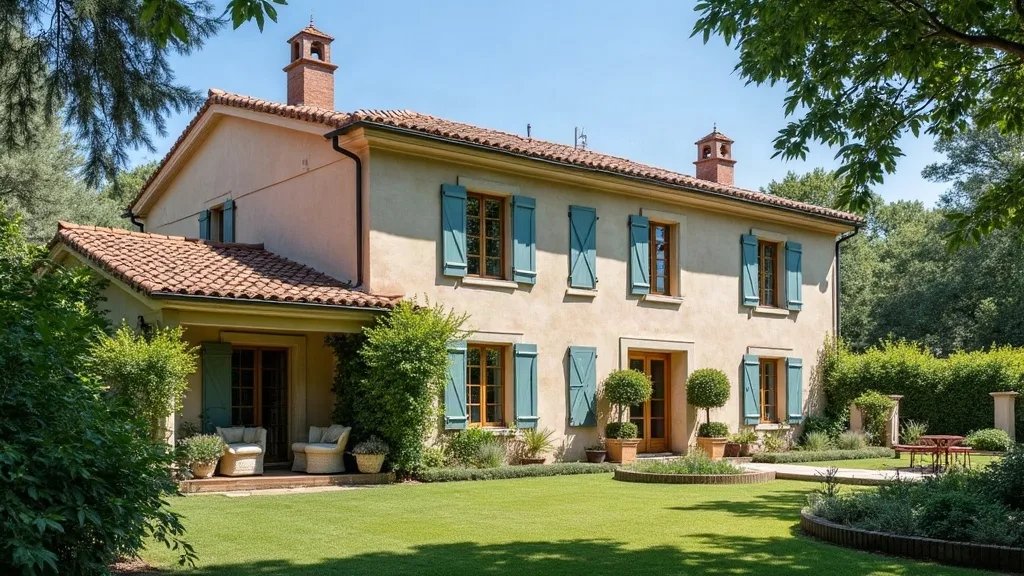
Article 663 of the French Civil Code provides that, within towns and built-up areas, any owner can require their neighbour to contribute to the construction and repair of a dividing fence. In practical terms, if you build a fence on the boundary line, your neighbour can be required to pay 50% of the cost. In Cannes, this obligation applies within the built-up urban area (zone UA of the CASA local zoning plan).
2. Permitted Height and Materials in Zone UA
The local zoning plan (PLU) of the Communauté d’Agglomération de Sophia Antipolis (CASA) sets out precise rules for fences in zone UA: a maximum height of 2 metres, and materials in keeping with the surrounding buildings (stone, through-coloured render, simple bar railings). Raw concrete block fences are prohibited. A sand or natural stone RAL shade is generally required.
3. Prior Planning Declaration (Déclaration Préalable)
Building or modifying a fence higher than 2 metres requires a prior planning declaration filed with the town hall (Article R421-11 of the Town Planning Code). In Cannes, the planning department checks compliance with the PLU, and the Architecte des Bâtiments de France (France’s heritage architect) must also give an opinion if the project lies within a protected heritage area — the Suquet district, for example.
4. Who Pays for the Fence: Case by Case
In urban areas (Article 663 of the Civil Code), the general rule is that the cost of building and maintaining a dividing fence is split equally between neighbours, whether or not the neighbour agrees. In practice, three situations arise:
- An existing party fence: maintenance and repair costs are split 50/50, unless otherwise agreed.
- A fence built entirely on the boundary by a single owner: it remains private property until the neighbour pays their share to make it a party structure (Article 661 of the Civil Code, the right to acquire party-wall status).
- Disagreement over whether to build a fence at all: within a built-up area, one neighbour can compel the other to contribute, if necessary through a court ruling.
5. Fences and Clay Shrinkage (RGA): A Technical Issue Often Overlooked
On the clay soils found along the Cannes coastline, masonry boundary walls are just as vulnerable to clay shrink-swell movement (RGA) as house foundations. Stair-step cracking on a low boundary wall can be a warning sign that should not be ignored, particularly when it appears after a dry summer.
FAQ
Can I refuse to let my neighbour build a fence on the boundary line? No, unless it fails to comply with the PLU (height, materials) or, in very specific cases, causes a disproportionate loss of view or sunlight (an abnormal neighbourhood disturbance).
Is a prior planning declaration always required? It is mandatory above 2 m in height, and local regulations sometimes require one even below that threshold in certain protected areas — worth checking with the town hall before starting work.
Have a similar project in mind? Our team can guide you from initial thinking through to completion. Contact us.
📅 Updated on 01/08/2026 — By Cassini Expertise, independent building expert covering the Alpes-Maritimes (06) & Var (83). Free quote: 04 22 46 06 04.
To go further:
Frequently Asked Questions
Who pays for a fence on the property boundary?
As a general rule, a boundary wall is presumed to be a party structure shared between two neighbours, and the costs are split equally. However, if the fence is not a party structure, the owner who builds it must bear the full cost alone. In zone UA, the PLU may impose specific requirements, such as a duty to fence the property, but the sharing of costs remains governed by the Civil Code.
What are the height and setback rules for a fence in zone UA?
In zone UA, height and positioning rules are set out in the PLU. The maximum height is generally limited (often between 1.50 m and 2 m), and the fence must be built on the property boundary line, unless otherwise specified. It is essential to check your municipality’s PLU for the exact requirements, as additional rules may apply (materials, appearance, etc.).
Can you build a fence without your neighbour’s agreement?
Yes, but only if the fence is built entirely on your own land and not directly on the shared boundary line. If it sits on the dividing line, it is presumed to be a party structure and requires the neighbour’s agreement, or you must respect setback rules (often 0.50 m from the boundary). In case of disagreement, it is advisable to consult a notary or lawyer to clarify property rights.
Cassini Expertise
Expert du bâtiment indépendant — Antibes (06·83·13·40)
📅 Mis à jour le 25/09/2026 — Cassini Expertise, expert bâtiment indépendant (06·83·13·40).