EXPERT ASSESSMENT — SNAG LIST
You receive a letter from the developer: « The snags have been cleared. » Yet the tiling in the living room still sounds hollow, the French door doesn’t close properly, and the expansion joint on the façade is still open. The vast majority of snag-list clearances I inspect in Nice hide uncorrected defects. The developer ticks a box, but the defect itself remains.
What you see — and what it’s really hiding
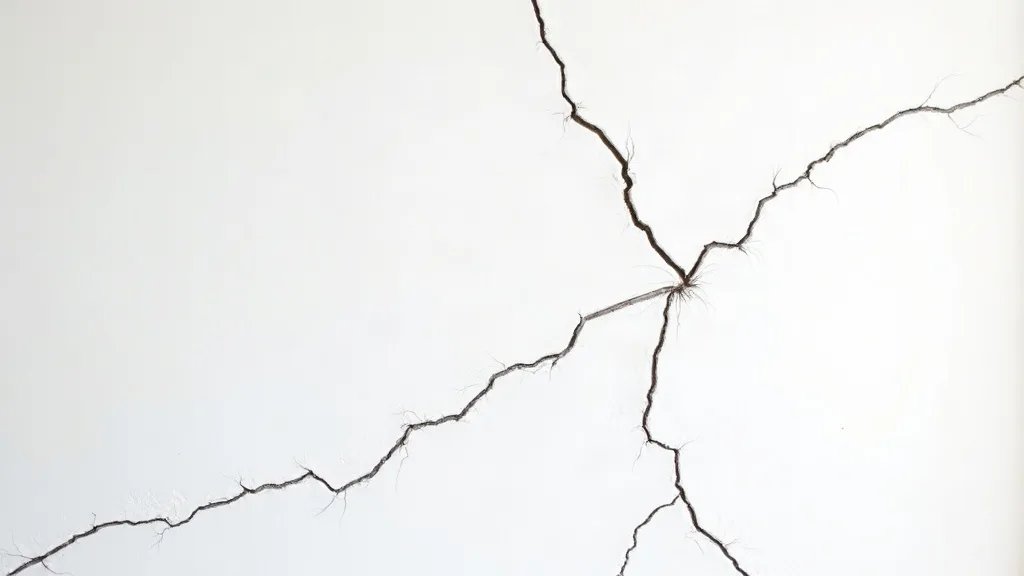
The developer sends you a signed « snag-list clearance declaration. » You re-read the original list: crack, damp, waterproofing defect… everything is marked « done. » But look closely and you’ll find the crack was simply filled with mastic, the damp was wiped away with no treatment of the underlying cause, and the waterproofing defect was « fixed » with a simple silicone bead.
What nobody tells you: a snag-list clearance is not a technical assessment. It’s an administrative declaration. Only an expert can certify that a defect has actually been corrected. In this kind of case, I often find a flatness deviation of 8 mm under the 2 m straightedge — the developer had just sanded down the screed. The NF DTU 26.2 standard tolerates 3 mm. The defect was still there.
The numbers that change everything: flatness tolerance
Take a concrete example: a living-room slab in Nice. You lay a 2 m straightedge and measure an 8 mm gap. The NF DTU 26.2 standard requires a maximum deviation of 3 mm under a 2 m straightedge for a tiled floor covering. The calculation: measured deviation = 8 mm, permissible deviation = 3 mm. Result: non-compliant. Article 1792-3 of the French Civil Code provides that defects affecting equipment elements create a presumption of the builder’s liability if the defect renders the structure unfit for its intended use. Tiling that sounds hollow or cracks falls squarely within this scope.
What happens if you do nothing
Six months later, the crack reappears, wider than before. The damp spreads to the neighbouring plasterboard. Within two years, the tiles start lifting. The cost of repair? Expect €3,000 to €8,000 for a full refit of the area, not to mention the disruption. And if you sell, the defect will be picked up during the pre-sale survey: the price drops, or the sale falls through.
What I often see: the developer is banking on your fatigue. They know most owners sign the clearance without checking. But the law is on your side.
Remedies and guarantees: what you’re entitled to demand
You are covered by the one-year « perfect completion » warranty (Art. 1792-6 of the Civil Code) for snags that haven’t been cleared. For serious defects, Article 1792 (ten-year structural liability) applies if the defect compromises stability or renders the structure unfit for its purpose. Procedure: send the developer a registered letter with acknowledgement of receipt giving formal notice to carry out the repairs, then bring the matter before the Nice judicial court if necessary. A court-appointed expert (such as myself) will record the defects and cost out the repairs. Don’t miss the window: the ten-year structural warranty runs for 10 years from handover.
📅 Updated on 24/08/2026 — By Cassini Expertise, independent building expert covering the Alpes-Maritimes (06) & Var (83). Free quote: 04 22 46 06 04.
Read more:
Frequently asked questions
Snag-list clearance in Nice: what should I do if the defect persists?
If the defect persists after the snag list has been cleared, you must notify the builder or contractor in writing (registered letter with acknowledgement of receipt), demanding that the work be redone within a reasonable timeframe. If they refuse or fail to act, you can apply to the urgent applications judge for an expert assessment and compensation, or bring a full claim before the court.
What is the deadline for clearing snags in Nice?
The legal deadline for clearing snags is generally one year from the handover of the works, although this period can be contractually shortened. After this deadline, any defects not reported are presumed accepted, unless they are hidden. It is therefore crucial to act quickly.
How do I prove a defect persists after the snag list has been cleared?
To prove a persisting defect, gather all the evidence: dated photographs, correspondence exchanged, expert reports, and witness statements. Have the defect formally recorded by a bailiff or a court-appointed expert. This evidence will be essential in any proceedings.
Cassini Expertise
Expert du bâtiment indépendant — Antibes (06·83·13·40)
📅 Mis à jour le 25/09/2026 — Cassini Expertise, expert bâtiment indépendant (06·83·13·40).