Clay shrink-swell (known in France as RGA — retrait-gonflement des argiles) is the leading cause of natural disaster compensation claims in France outside of flooding. In the Alpes-Maritimes (06) and Var (83), recurring drought episodes combined with clay-rich soils expose many single-family homes to structural cracking. Here is what every homeowner needs to understand to protect their property.
House Wet clay soil WET STATE (swollen) House Dry clay soil (shrunk) DRY STATE (cracked) Shrinkage dries out the soil → differential settlement → cracks House Wet clay soil WET STATE (swollen) House Dry clay soil (shrunk) DRY STATE (cracked) Shrinkage dries out the soil → differential settlement → cracks
The geotechnical mechanism behind RGA
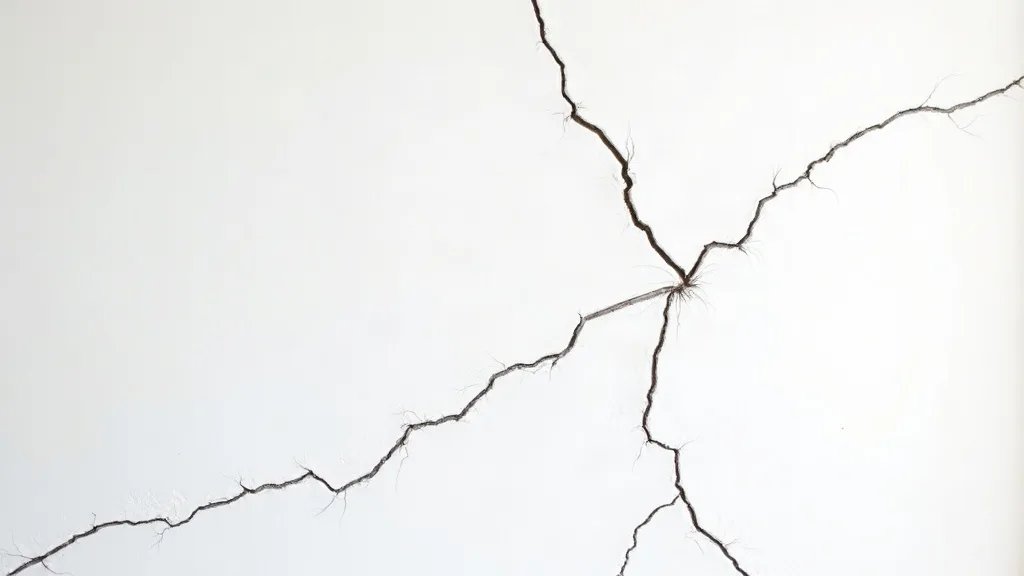
Clay soils have the particular characteristic of changing volume depending on their water content. During drought periods, water evaporates and the clay shrinks, causing differential settlement of the ground. During rehydration periods (heavy rainfall), the clay swells back up. These alternating movements, transmitted to the foundations, generate stresses that a standard house structure cannot always absorb. Defects generally appear on shallow foundations (less than 1.20 m deep) built on sensitive soils.
Exposure zones in the Alpes-Maritimes and Var
The official government zoning identifies three exposure levels: low, moderate, and high. In the Alpes-Maritimes and Var, many municipalities are classified as moderate to high risk, particularly in the hinterland (Var Valley, Haut-Var, Fayence area) where clay-marl formations are exposed at the surface. Since the 2018 ELAN law, any new construction in a moderate or high-risk zone requires a preliminary geotechnical survey (G1 mission), supplemented by a design study (G2 mission) in high-risk zones. Checking your municipality’s classification is the first step in any project or diagnostic.
How to recognize RGA cracks
Shrink-swell cracks have characteristic signatures:
- Stepped cracks along masonry joints (concrete blocks, bricks), typical of differential settlement.
- Through-cracks visible on both sides of a load-bearing wall.
- Cracks at corners of openings (doors, windows), running at 45° from lintels or sills.
- Separation between perpendicular walls or between extensions and the main structure.
- Openings that stick or no longer close properly.
The natural disaster (CATNAT) recognition process
Compensation for RGA damage requires official recognition of a state of natural disaster (CATNAT) by ministerial decree. Homeowners have 30 days after the decree is published to report the damage to their insurer. For property damage, the deadline is 10 business days. The municipal request for recognition must be supported by weather data (Météo-France) confirming abnormal drought conditions. This is why it is crucial to document the appearance of cracks precisely: dates, dated photographs, and progression records.
The role of the building expert
A building expert intervenes at several levels: producing an objective technical assessment (crack mapping, width, progression), determining the probable cause (RGA versus a construction defect), and evaluating remediation solutions (underpinning, tie-beams, injection). Their report is decisive in negotiations with insurers and, in case of disagreement, before a judge. They can also set up crack monitoring (installing witness markers) to objectively track how the damage evolves over several months.
Prevention: building and renovating on clay soil
To prevent RGA damage, best practices include: foundations anchored at sufficient depth, foundation uniformity, controlling nearby vegetation (trees draw water from the soil), managing rainwater and connecting to the drainage network, and stiffening the structure (horizontal and vertical tie-beams). For renovations, a preliminary diagnostic allows weak points to be corrected before they become visible problems.
Learn more
- Structural or surface cracks: how to tell them apart and when to worry
- Foundations without a soil survey: consequences and warning signs (06 and 83)
- Structural diagnosis before buying: essential checkpoints for older properties (06 and 83)
📅 Updated on 21/07/2026 — By Cassini Expertise, independent building expert for the Alpes-Maritimes (06) & Var (83). For a full diagnosis of your structural issues or crack monitoring, contact us. Free quote: 04 22 46 06 04.
Learn more:
Frequently asked questions
What is RGA (clay shrink-swell)?
RGA (retrait-gonflement des argiles, or clay shrink-swell) is a natural phenomenon in which clay soils shrink during droughts and swell when rehydrated, which can damage building foundations. In the Alpes-Maritimes and Var, this risk is particularly high, and a natural disaster decree can be issued to compensate affected homeowners.
How do I know if my municipality is affected by RGA in the Alpes-Maritimes or Var?
You can check the natural disaster recognition decree published in the Official Journal, which lists the affected municipalities. The Géorisques website also lets you view clay shrink-swell exposure zones for each municipality.
What are the steps to get compensated after RGA damage?
You must file a claim with your town hall within 30 days of the natural disaster decree being published, then send a declaration to your insurer within 5 business days of that publication. An expert will assess the damage, and compensation will depend on your policy and official recognition of the disaster.
Cassini Expertise
Expert du bâtiment indépendant — Antibes (06·83·13·40)
📅 Mis à jour le 25/09/2026 — Cassini Expertise, expert bâtiment indépendant (06·83·13·40).