Construction Defects in New-Build Homes: What to Do and Which Warranty to Invoke?
A construction defect (malfaçon) is a workmanship flaw found in a new-build home or under a CCMI (individual house building contract) — a discrepancy between the finished work and what was agreed: the contractual plans, standard trade practice, or the DTU (unified technical standards) applicable to the trade concerned. Three statutory warranties protect the homeowner after handover: the warranty of perfect completion (garantie de parfait achèvement, GPA), valid for 1 year, covering all defects noted at handover or appearing within the year; the two-year warranty (garantie biennale), covering detachable fixtures and equipment; and the ten-year structural warranty (garantie décennale), covering defects that compromise the structural soundness of the building or render it unfit for its intended purpose, under Article 1792 of the French Civil Code.
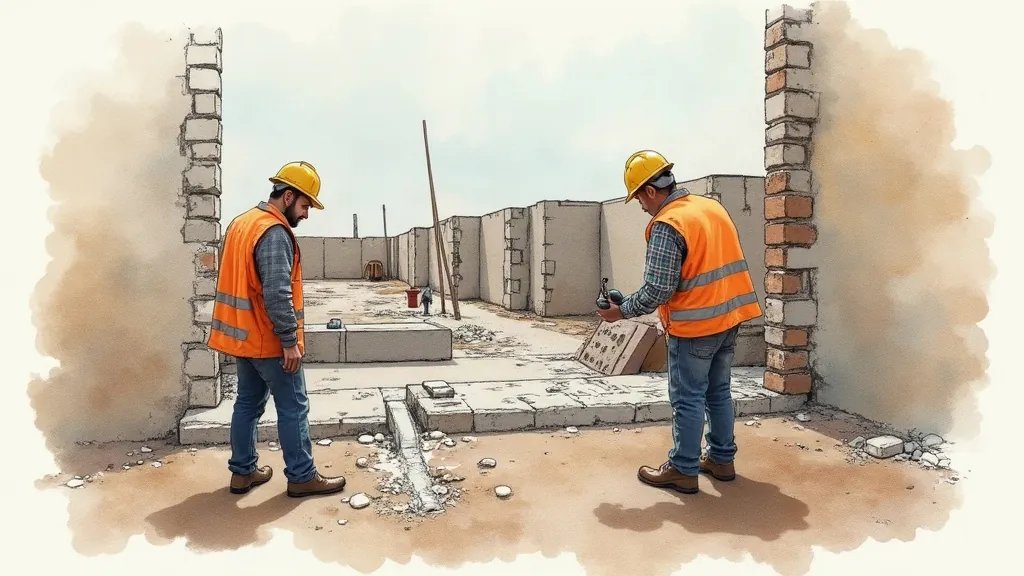
Each warranty has its own time limit, conditions, and points of contact. Once the deadline passes, the claim is extinguished, regardless of how serious the defect is. Cassini Expertise, an independent building expert based in Antibes, identifies, dates, and legally qualifies the defects found, in order to activate the right warranty before it lapses and build a technical case file that can be relied upon against the builder or their insurer.
Step by Step: Understanding the Warranties
Handover and Reservations: The Key to the Warranty Timeline
Handover of the works (réception des travaux), formalised in a handover report (procès-verbal) signed by the homeowner and the builder, marks the starting point for all warranties. Defects visible at that stage must be recorded as reservations on the report; otherwise they fall outside the scope of the warranty of perfect completion for apparent defects. This is why technical assistance at handover — or, failing that, a prompt inspection after moving in — helps secure this decisive step for the rest of the case.
The Warranty of Perfect Completion (1 year)
During the year following handover, the builder must remedy all defects reported, whether they were noted as reservations at handover or notified in writing afterwards. The process relies on a formal notice sent by registered letter with acknowledgement of receipt, detailing each defect precisely. An expert report provides an objective list of the defects, their location, and their extent, which prevents any dispute over the scope of the repairs expected. For more on this warranty, see our dedicated article: the CCMI warranty of perfect completion explained.
The Two-Year Warranty
This warranty covers fixtures and equipment that can be detached from the building’s main structure: roller shutters, boiler, mechanical ventilation (VMC), plumbing fixtures, intercom, motorised gate. A fault found within two years of handover engages the liability of the builder or manufacturer, provided the equipment was installed as part of the original contract. Here too, a dated technical assessment precisely establishes when the defect appeared and avoids any dispute over how the deadline is calculated.
The Ten-Year Structural Warranty
The ten-year structural warranty covers defects affecting the soundness of the building or rendering it unfit for its intended purpose: structural cracks, widespread water infiltration, foundation defects, or defects affecting the building’s overall waterproofing. It engages the ten-year insurance (assurance décennale) of the builder, the mason, or any other party involved in the construction. The expert report must demonstrate the link between the defect and one of these two legal criteria; otherwise the ten-year warranty may be set aside in favour of the less protective two-year warranty. For guidance on pursuing a full claim, see our article: CCMI: pursuing a claim for construction defects.
Common Defects Found in New Builds in the Alpes-Maritimes and Var
Certain defects recur regularly in new-build and CCMI homes delivered in the 06 and 83 departments:
- Untreated cracks: cracking in façades or slabs appearing shortly after handover, often linked to foundation defects, clay shrink-swell movement, or poorly executed structural work.
- Non-compliant rendering: insufficient thickness, delamination, premature crazing, or a finish that does not match the contractual specification.
- Terrace waterproofing: insufficient slope, poorly executed waterproofing upstands, infiltration under the slab — particularly common on the accessible flat roof terraces typical of the region.
- Swimming pools: poorly installed shells, badly ventilated or poorly sealed plant rooms, cracking of the pool structure, non-compliance with safety regulations.
- Utilities and site services (VRD): insufficient drainage slopes, poor rainwater management, rising damp at the base of façades or in basements.
- Loft insulation: incomplete installation or work not matching the specification, thermal bridging, thermal performance below what was contractually promised.
Expert Assessment: Amicable or Judicial Route
There are two frameworks for having defects officially recorded. The amicable, adversarial expert assessment (expertise amiable contradictoire) involves summoning all parties concerned (builder, subcontractors, insurers) to an on-site meeting to establish a shared record of the defects. This route is often faster and less costly, and can lead to a repair agreement without court proceedings.
When an amicable agreement fails, or urgency requires it, a court-appointed expert assessment (expertise judiciaire) is sought before the relevant court (Nice, Toulon, Grasse, or Draguignan depending on the site location), under Article 145 of the French Code of Civil Procedure, which allows a court expert to be appointed before any trial on the merits, in order to preserve evidence of the defects. In both cases, Cassini Expertise carries out instrumented measurements (crack monitors, moisture readings, slope checks), produces a detailed costing of the repairs required, and delivers a technical report that can be relied upon — an essential basis for any subsequent negotiation or legal proceedings.
Frequently Asked Questions
From what date does the ten-year structural warranty run?
The ten-year structural warranty runs from the date of handover of the works, as recorded on the handover report, not from the date of moving in or from when the defect is discovered.
What if the builder has gone into liquidation or disappeared?
If the builder goes into liquidation or cannot be traced, the claim turns to the mandatory building damage insurance (assurance dommages-ouvrage, DO), which must be taken out before the start of works, as well as to the ten-year insurance of the various parties involved in the construction.
What if a defect was not noted as a reservation at handover?
A defect not reserved at handover can still be reported in writing within the year following handover under the warranty of perfect completion, or may fall under the two-year or ten-year warranty depending on its nature. Several options therefore remain available, provided you act quickly.
How much does an expert assessment for construction defects cost?
The cost depends on the nature of the defects, the number of trades involved, and the framework chosen (amicable or judicial). Cassini Expertise provides a free quote tailored to each case before any intervention.
To have defects in a new-build home or CCMI identified and legally qualified in the Alpes-Maritimes or Var, contact Cassini Expertise on 04 22 46 06 04.
Related Articles
- VEFA Off-Plan Purchase Expert Assessment
- CCMI: Pursuing a Claim for Defects
- RGA Clay Shrinkage / Natural Disaster Claims
Cassini Expertise
Expert du bâtiment indépendant — Antibes (06·83·13·40)
📅 Mis à jour le 25/09/2026 — Cassini Expertise, expert bâtiment indépendant (06·83·13·40).