PROPERTY LAW — EASEMENTS
You’ve bought a plot of land in Toulon, in Les Ponchettes or La Rode, to build your villa with a view over the roadstead. But the notary informs you that a “non aedificandi” easement encumbers your land — you cannot build at all, or only within certain limits. Or perhaps you’re the owner who benefits from this easement, and you’ve noticed your neighbour is building anyway. The non-aedificandi easement is one of the most restrictive in French property law. Here’s how to handle it in practice.
1. What is a non-aedificandi easement?
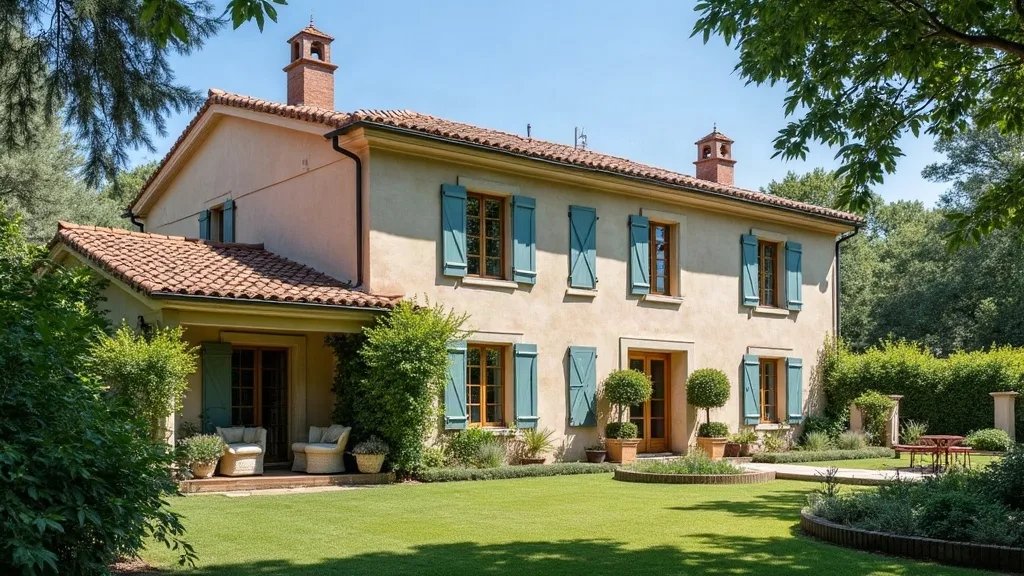
A non-aedificandi easement (literally “not to build”) prohibits the owner of the encumbered plot from erecting any construction on it, or only allows constructions limited in height, floor area or location. It can be:
- Contractual: set out in the sale deed, often to preserve a neighbour’s view.
- Statutory: imposed by the Local Urban Plan (PLU) or by protected-area regulations.
- Judicial: ordered by a court as part of a boundary survey or a partition.
- Ladder-access easement in Nice: the right to access your neighbour’s property for your works (Art. 682 French Civil Code)
In Toulon, where plots overlooking the roadstead offer exceptional views, this type of easement is common in the Mourillon, La Rode and Cap Brun districts.
2. What can you build if your plot is encumbered?
Everything depends on the precise wording of the deed establishing the easement:
- Total prohibition: no above-ground construction whatsoever, not even a garden shed or carport.
- Partial prohibition: a height limit (e.g. max 4 metres to the ridge), a limit on footprint, or restrictions on materials.
- Exceptions: fences, retaining walls and in-ground swimming pools are generally not considered “constructions” within the meaning of the easement (unless stated otherwise).
- Ladder-access easement in Nice: the right to access your neighbour’s property for your works (Art. 682 French Civil Code)
Important: a non-aedificandi easement does not apply to maintenance or repair work on an existing structure. Nor can it prohibit plantings, unless the deed specifically states so.
3. Unlawful construction: is demolition inevitable?
If the owner of the encumbered plot builds in breach of the easement, the owner of the benefiting plot can demand demolition. Recent case law confirms that demolition is mandatory in the event of a clearly established breach of a non-aedificandi easement (Cass. 3e civ., 7 July 2015, No. 14-18.197).
However, the judge may refuse demolition if it would be disproportionate to the harm suffered — for example, if the construction is minor and the easement only protects a partial view. In that case, the affected owner may instead be awarded damages.
4. The procedure in case of breach
Step 1: Establishing the breach
Have a court bailiff (commissaire de justice) formally record the construction and its non-compliance with the easement deed. Photos, plans, surveys. Cost: €200–300.
Step 2: Formal notice
Send a registered letter with acknowledgement of receipt, citing the terms of the easement and demanding demolition within 30 days.
Step 3: Court proceedings
File a claim with the Toulon judicial court. An action for demolition is time-barred after 5 years from completion of the works. After that period, the easement is deemed to have been abandoned through tolerance (Art. 707 French Civil Code). You can also request an expert assessment to evaluate the damage.
5. How can a non-aedificandi easement be lifted?
The easement can be removed if:
- The owner of the benefiting plot waives it (by notarial deed, potentially in exchange for compensation)
- Both parties agree to an amending agreement (in exchange for financial compensation)
- The easement is no longer of any use to the benefiting plot (Art. 703 French Civil Code — extinguishment due to impossibility of use)
- Acquisitive prescription applies (30 years of use contrary to the terms of the easement)
- Ladder-access easement in Nice: the right to access your neighbour’s property for your works (Art. 682 French Civil Code)
Case study: Toulon, Cap Brun peninsula
The owner of a villa in Cap Brun benefited from a non-aedificandi easement prohibiting any construction above the 45-metre elevation mark on the neighbouring plot. The neighbour added an extra storey to their villa, exceeding the permitted elevation. A bailiff’s report and a tacheometer survey confirmed a 2.30-metre excess. The court ordered demolition of the second storey at the fault owner’s expense (€45,000 in works).
To go further
- Shared courtyard easement in Marseille: rights and obligations of each co-owner
- Ladder-access easement in Nice: the right to access your neighbour’s property for your works (Art. 682 French Civil Code)
📅 Updated 23/08/2026 — By Cassini Expertise, independent building expert covering the Alpes-Maritimes (06) & Var (83). Free quote: 04 22 46 06 04.
To go further:
Frequently asked questions
What can you build on a plot with a non-aedificandi easement?
A non-aedificandi easement prohibits any construction, even minor, on the encumbered portion of land. You may only install non-permanent, removable fixtures, such as a movable fence or plantings. To build anything at all, you must obtain the release of the easement with the agreement of the owner of the benefiting plot.
What happens if you build despite a non-aedificandi easement?
The owner of the benefiting plot can seek a court order for demolition of the construction, even if it was authorised by a building permit. Demolition is ordered if the construction infringes the easement. You may also be ordered to pay damages and a civil fine.
Can you obtain tolerance for an existing construction on an encumbered plot?
Tolerance is only possible if the owner of the benefiting plot agrees to waive the easement, through a notarial deed. Without this agreement, the construction remains unlawful and demolition can be demanded at any time, subject to the thirty-year prescription period. It is therefore essential to regularise the situation.
Cassini Expertise
Expert du bâtiment indépendant — Antibes (06·83·13·40)
📅 Mis à jour le 25/09/2026 — Cassini Expertise, expert bâtiment indépendant (06·83·13·40).