EXPERTISE — RESERVATIONS
You signed the delivery report for your new apartment in Nice, listing reservations. The developer sends you a letter saying “reservations lifted.” Except the defect is still there. On a recent case in Nice West, I measured a partition misalignment of 4 cm — well beyond the tolerated 1 cm. Yet the developer had signed off on the lifting. This is a common situation on the French Riviera, where the tight market pushes for faster deliveries.
What You See — and What It Really Hides
You look at the widening tile joint, the window that doesn’t close properly, the wall that isn’t straight. The developer tells you: “everything is compliant, the reservations are lifted.” But technically, what was checked? Nothing, or almost nothing. Often, the lifting is administrative: the developer declares having corrected without a joint inspection. What no one says: the law imposes a real technical verification, not just a piece of paper.
On a case in Nice last year, I measured a slab flatness defect of 8 mm over 2 m, while the NF DTU 52.10 standard (French technical document for floor screeds) tolerates 5 mm. The developer had “checked” with a spirit level, not a 2 m straightedge. Result: the lifting was abusive. An independent expert can demonstrate this with precise measurements.
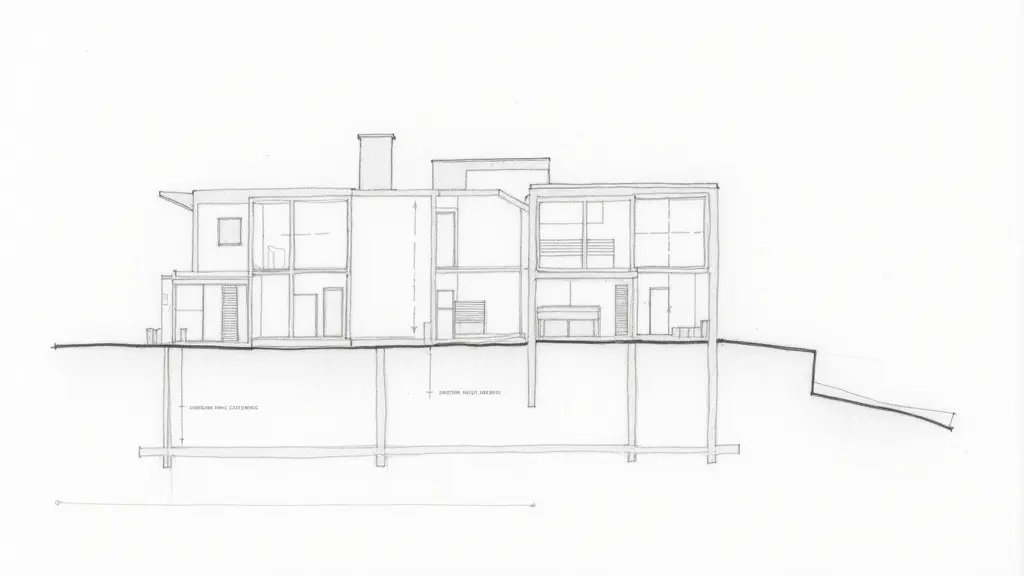
Principle Diagram: Uncorrected Defect vs Abusive Lifting
The Calculations That Change Everything: Measured Gap vs Legal Tolerance
Let’s take a concrete example in Nice. You measure the distance between two partitions: 4.00 m. The VEFA plan indicates 4.04 m. The gap is 4 cm. The usual tolerance for a new home is ±1 cm on interior dimensions (according to NF DTU 52.1, French standard for interior partitions). The calculation: gap = |4.04 – 4.00| = 0.04 m = 4 cm. That is 4 times the tolerance. What this means concretely: the defect is proven, the lifting of reservations is abusive. Article 1792-6 of the Civil Code (paragraph 2) specifies that acceptance is the act by which the client accepts the work with or without reservations. Reservations must be lifted technically, not administratively.
Another common calculation: wall flatness. With a 2 m straightedge, you measure a deviation of 8 mm. The NF DTU 52.10 tolerance (French standard for floor flatness) is 5 mm under a 2 m straightedge. The gap is 3 mm, i.e., 60% excess. The developer cannot declare the lifting without having redone the plaster.
What Happens If You Do Nothing: Accelerated Deterioration
An uncorrected defect does not remain stable. In Nice, with humidity and temperature variations, a misaligned partition can crack the tiles within 6 months. A poorly installed window seal lets in air and water: within 2 years, mold and peeling wallpaper. Costs? Expect €500 to €2,000 per defect if you have to have it repaired after the warranty. And if the defect affects the structure (e.g., a mispositioned beam), the consequences can be much more serious.
I saw a case in Nice where an uncorrected slab level defect caused a reverse drainage slope in the bathroom: water stagnated under the bathtub. The owner waited a year, the tiles came off. Total repair cost: €3,500. The developer eventually paid after a formal notice, but the hassle was avoidable.
Recourse and Guarantees: What You Can Demand
You are protected by the perfect completion guarantee (Article 1792-6 of the Civil Code, paragraph 3), which lasts one year from acceptance. The developer must redo all defects listed in the reservations report, even if the lifting was declared abusively. Send a registered letter with acknowledgment of receipt to the developer, detailing the uncorrected defects and demanding their repair within 15 days. If no response, file a claim with the Nice judicial court (expedited procedure on the merits). Have an independent expert assist you to document the defects through a joint inspection. In Nice, court delays are long: it is better to act quickly, within 6 months of the abusive lifting.
Articles connexes :
Lire un plan VEFA à Nice : détecter les …
📅 Mis à jour le 18/08/2026 — Par Cassini Expertise, expert bâtiment indépendant 06 & 83. Devis gratuit : 04 22 46 06 04.
Questions fréquentes
VEFA réservation levée défauts non corrigés que faire ?
En cas de levée de réservation malgré des défauts non corrigés, vous devez notifier le vendeur par lettre recommandée avec accusé de réception en listant précisément les réserves. Si aucune action n'est entreprise, vous pouvez saisir le tribunal judiciaire pour obtenir la reprise des travaux ou des dommages-intérêts, sous réserve des délais de garantie.
Délai pour signaler défauts après levée réserves VEFA ?
Vous disposez d'un délai d'un mois après la levée des réserves pour signaler par écrit les défauts apparents non corrigés, selon l'article 1642-1 du Code civil. Passé ce délai, vous perdez la possibilité d'agir sur ces désordres apparents, mais les vices cachés restent couverts par la garantie décennale.
VEFA défauts non corrigés refuser levée réservation ?
Oui, vous pouvez refuser de lever les réserves si les défauts n'ont pas été corrigés. La levée des réserves est un acte important : elle clôt la réception. En refusant, vous maintenez la pression sur le promoteur pour qu'il achève les travaux, mais consultez un avocat pour respecter les procédures et éviter tout litige.
Cassini Expertise
Expert du bâtiment indépendant — Antibes (06·83·13·40)
📅 Mis à jour le 19/09/2026 — Cassini Expertise, expert bâtiment indépendant (06·83·13·40).