Tile debonding: understanding the defect
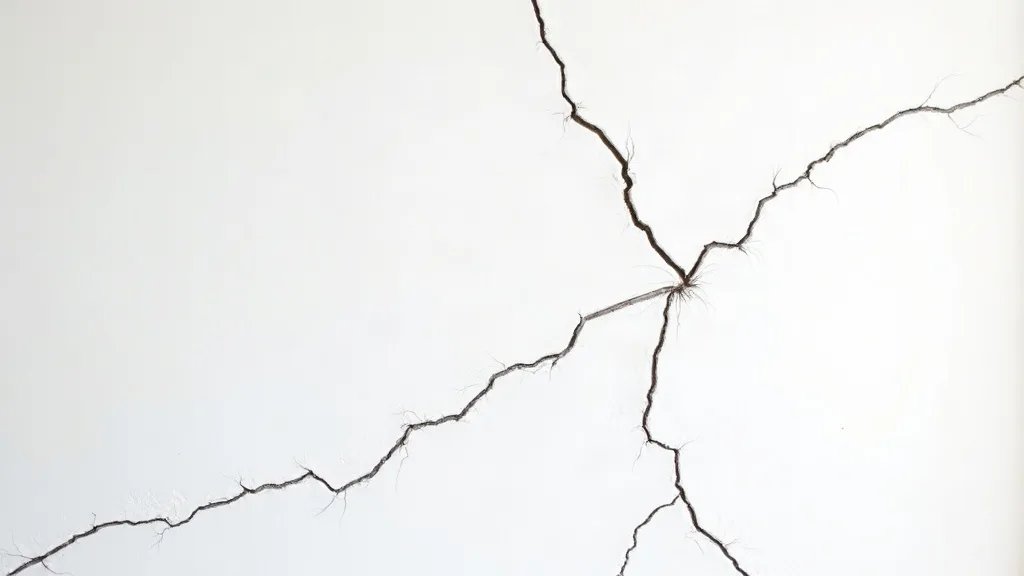
Tile debonding shows up as a hollow sound when tapped, tiles gradually lifting, or complete detachment from the substrate. This defect mainly affects adhesive-fixed floor coverings, whether porcelain stoneware, ceramic tile, or natural stone.
In Nice and across the Alpes-Maritimes, significant thermal swings (from 5°C in winter to over 35°C in summer) put real stress on the adhesive-substrate interface. When the initial bond is inadequate, these thermal cycles cause progressive debonding, tile by tile, sometimes across several square metres.
Diagnosis relies on a visual inspection (loose tiles, perimeter cracks), systematic tapping with a plastic-headed mallet, and, where there’s a dispute, a standardised pull-off test.
The pull-off test under DTU 52.1
How the method works
DTU 52.1 (Building Works – Bonded Floor Coverings) references adhesion testing by pull-off. The method involves bonding a metal dolly to the tile using a two-component epoxy resin, then applying perpendicular tension with a calibrated dynamometer.
The force F (in newtons) required to cause failure is measured, then the bond strength is calculated as σ = F / A, where A is the pull-off surface area in mm². The result is expressed in megapascals (MPa).
Adhesion thresholds under NF EN 12004
Standard NF EN 12004, covering adhesives for ceramic tiles, sets minimum adhesion requirements. For class C1 (normal) tile adhesives, initial adhesion must reach at least 0.5 MPa after 28 days. For class C2 improved adhesives, the threshold rises to 1 MPa.
These values apply to laboratory tests on standardised specimens. On site, in real-world conditions, results can vary depending on the nature of the substrate, the temperature during installation, and the actual coverage rate of the adhesive.
Important: the 0.5 MPa threshold referenced in some documents applies to wet rooms (bathrooms, kitchens) as specified in the project’s technical particulars (DPM). For dry rooms (living rooms, bedrooms), there is no strict regulatory threshold, but adhesion must be sufficient to withstand normal use.
On-site expert protocol
The expert follows this sequence:
- Identifying suspect areas through systematic tapping and mapping tiles that sound hollow
- Selecting at least three test points per homogeneous zone, spaced at least 1 metre apart
- Bonding metal dollies (typically 40 to 50 mm in diameter) with epoxy resin, allowing a minimum 24-hour curing time
- Pulling off perpendicular to the surface at a constant rate (around 10 mm/min) until failure
- Recording the maximum force F and identifying the failure mode (failure within the adhesive, at the adhesive-substrate interface, at the adhesive-tile interface, or cohesive failure of the tile or substrate)
- Calculating the bond strength σ and comparing it against reference thresholds
This method identifies whether the adhesion defect originates from the adhesive itself, the substrate (dust, laitance, residual moisture), the tile (insufficient coverage), or a combination of these factors.
Technical causes of debonding
The most commonly observed causes are:
- Insufficient adhesive coverage: DTU 52.1 requires a minimum coverage rate of 70% for standard-size tiles in dry rooms. Partial coverage (single-notch trowelling, no back-buttering for large-format tiles) reduces the actual contact area and therefore overall adhesion.
- Poorly prepared substrate: presence of cement laitance, dust, traces of plaster or formwork oil, or a porous substrate that hasn’t been primed. These act as a barrier between the adhesive and the substrate.
- Residual substrate moisture: a screed that hasn’t dried sufficiently (moisture content > 3% for cement screeds, > 0.5% for anhydrite screeds) prevents the adhesive from curing properly.
- Excessive substrate flexibility: timber floors, thin screeds over insulation, absence of movement joints. Substrate movement puts the adhesive under shear stress.
- Failure to respect the adhesive’s open time: tiles laid after the adhesive has started to skin over (« crusting »), particularly common in summer due to heat and wind.
- No expansion or movement joints: thermomechanical stresses build up and cause localised debonding, often at room corners or along walls.
Consequences of debonding and how the defect develops
Localised debonding (a few tiles) isn’t a serious defect on its own. Progressive debonding across several square metres, however, threatens the durability of the installation:
- Risk of loose tiles breaking, with a risk of injury to occupants
- Water or dust infiltration under the tiles, degrading the screed and causing mould and odours
- The debonded area expanding through successive thermal cycles
- The need for complete removal and re-tiling, at an overall cost of €80 to €120/m² (removal, disposal, substrate preparation, re-laying, materials)
Catching the defect early often allows for a partial repair, via resin injection or re-laying only the affected tiles. Once a year has passed since the defect appeared, the extent of the debonded area usually requires a full re-tiling.
Legal framework and applicable warranties
Warranty of perfect completion
Article 1792-6 of the French Civil Code requires the contractor, for one year from handover, to fix any defect reported by the property owner. Tile debonding, if it appears within this period, falls under this warranty. It is enforced by sending the contractor a registered letter with acknowledgement of receipt.
Warranty of proper functioning (two-year warranty)
Article 1792-3 of the French Civil Code provides a two-year warranty for equipment that can be detached from the building without damage. Tiling, being incorporated into the structure, does not normally fall under this warranty but under the ten-year structural warranty.
Ten-year structural warranty (garantie décennale)
Article 1792 of the French Civil Code states that every builder is automatically liable to the property owner for damage that compromises the structural soundness of the building, or that, by affecting one of its constituent parts or equipment, renders it unfit for its intended purpose. The period runs from handover without reservations.
Floor tiling, as a constituent part of the building, falls under this warranty when the debonding is extensive (over 10% of the total area, according to case law) or when it affects the normal use of the room (main living space, circulation areas).
The Court of Cassation has held that widespread tile debonding constitutes a defect falling under the ten-year structural warranty (Cass. 3e civ., 16 June 2010, no. 09-15.962). The Nice Judicial Court or the Grasse Judicial Court, depending on the property’s location, has jurisdiction over these disputes.
Contractor’s contractual liability
Beyond the statutory warranties, the property owner may pursue the contractor’s contractual liability under Article 1231-1 of the French Civil Code (formerly Article 1147), for non-performance or improper performance of the contract. The owner must then demonstrate a breach of standard building practice (DTU 52.1, NF EN standards) and the resulting loss.
Expert procedure and legal remedies
Amicable notice and formal demand
As soon as the defect is identified, the owner should send the contractor (or the developer, in the case of an off-plan purchase) a registered letter with acknowledgement of receipt, precisely describing the defect (location, affected surface area, date it appeared) and requesting action within eight days.
It is advisable to include photographs and, where possible, an initial assessment by a professional (architect, inspection body, or private expert).
Contradictory expert assessment
If the contractor refuses to act or disputes the issue, the owner can appoint an independent expert to carry out a contradictory (joint) assessment. The expert carries out pull-off tests, determines the causes of the defect, estimates repair costs, and identifies liability.
The expert report is a key piece of evidence should the matter go to court.
Court-ordered expert assessment
The interim relief judge of the Judicial Court (référé-expertise, under Article 145 of the Code of Civil Procedure) can be asked to order an expert assessment before any proceedings on the merits. This procedure allows the defect to be formally recorded, its causes identified, and the resulting losses assessed, even if the other party disputes the claim.
A court-appointed expert has broad investigative powers: access to the site, requests for documents (plans, technical specifications, invoices, inspection reports), and the ability to carry out destructive testing if needed.
Action on the merits
If the expert assessment confirms defective work, the owner can sue the contractor or developer before the Grasse Judicial Court (for Antibes, Cannes, Grasse, Mougins, Vallauris) or the Nice Judicial Court (for Nice and communes in the east of the department), depending on the property’s location.
The owner seeks a court order requiring the defendant to carry out repairs or, failing that, to pay damages equal to the cost of the work, plus, where applicable, compensation for loss of enjoyment.
On appeal, the Aix-en-Provence Court of Appeal has jurisdiction to review decisions of the Judicial Courts in the Alpes-Maritimes.
Cassini Expertise’s approach
Assessing tile debonding follows a structured protocol:
- Preliminary review: photographs of the defect, the technical file (plans, applicable DTU, specifications) and the legal context (handover date, warranties in effect, correspondence exchanged)
- Site visit: full visual inspection, systematic tapping of every tile, mapping debonded areas onto a plan, measuring flatness deviations, checking for the presence and correct positioning of expansion joints
- Destructive testing: removing tile samples to examine the underside (adhesive traces, coverage rate), inspecting the substrate (nature, surface condition, residual moisture), and pull-off tests on tiles still in place
- Technical analysis: identifying the causes of the defect (substrate, adhesive, workmanship), assessing the defect against statutory warranties, and estimating the cost of repair (partial repair or full re-tiling)
- Written report: description of the defect, map of affected areas, test results (photos, measurements), analysis of causes, legal classification, costed estimate of repair works, and technical recommendations for re-tiling
The report is a technical document that can be relied upon in an amicable settlement or in court proceedings.
Frequently asked questions
Why are my tiles coming loose in Nice?
Tile debonding in Nice is most often the result of inadequate substrate preparation (laitance, dust, residual moisture) or incomplete adhesive coverage. The significant thermal swings between summer and winter stress the adhesive and expose initial bonding defects. A pull-off test measures actual adhesion and identifies the cause of the defect.
How do you test tile adhesion under DTU 52.1?
The adhesion test involves bonding a metal dolly to the tile with epoxy resin, then applying perpendicular tension with a calibrated dynamometer. The force needed to cause failure is measured and the bond strength calculated in megapascals. The failure mode (adhesive, substrate, or tile) indicates the source of the defect. This test must be carried out by a qualified professional, at least 28 days after installation.
What warranty applies to tiles that are coming loose?
If the debonding appears within one year of handover, it falls under the warranty of perfect completion (Article 1792-6 of the Civil Code). If the debonding is extensive and affects the normal use of the room, it falls under the ten-year structural warranty (Article 1792 of the Civil Code), applicable for ten years from handover. The owner should report the defect by registered letter to the contractor or developer, then commission an expert assessment to establish liability.
Have a doubt? A question about your property?
Honest answer within 24 working hours — independent expert, no work ever sold.
Cassini Expertise
Expert du bâtiment indépendant — Antibes (06·83·13·40)
📅 Mis à jour le 25/09/2026 — Cassini Expertise, expert bâtiment indépendant (06·83·13·40).