PLANNING LAW — ISSUES
You built a wooden terrace last summer, and when checking your building permit, you realize it extends 1.20 metres beyond the authorized ground coverage. In Nice, even a minor non-compliant extension can trigger a planning inspection. A neighbour has already reported a roof overhang to the east, and the town council takes a hard line on the local zoning plan (PLU).
What you see — and what it’s really hiding
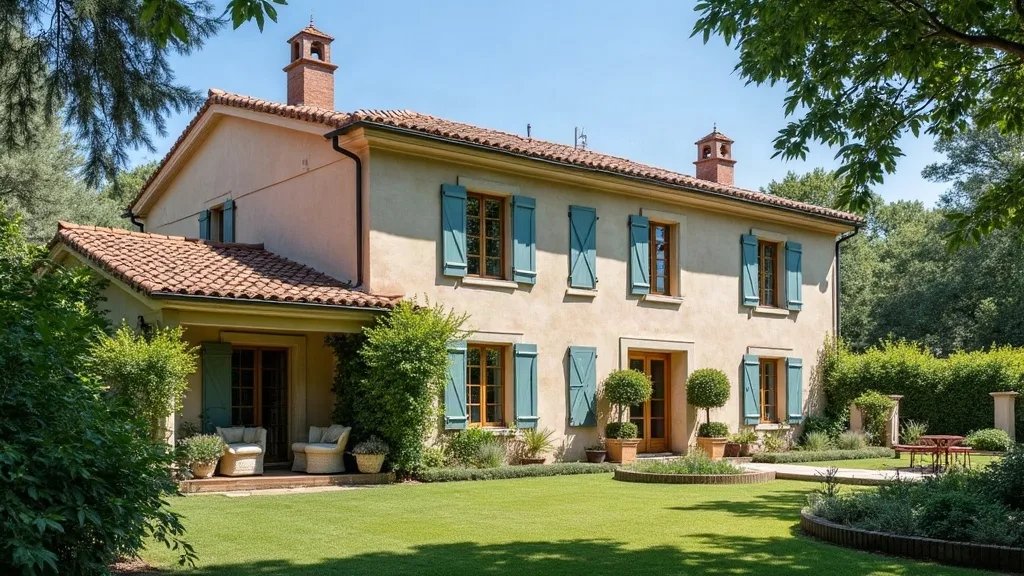
You measure your terrace with a tape measure: 4.50 m by 3.00 m, or 13.50 m². Your permit plans show a ground coverage of 80 m² for the house. What you don’t know is that ground coverage is calculated as the vertical projection of all enclosed and covered areas, including roof overhangs exceeding 0.50 m. Your terrace, although open-sided, is covered by a fixed pergola — so it counts towards the ground coverage.
Field experience regularly shows cases of a villa where the owner had added 18 m² of covered terrace without declaring it. The result: a formal infringement notice and an order to demolish within 6 months. What nobody tells you: Nice town council now uses aerial photography and LiDAR surveys to detect discrepancies. A quick look at Géoportail isn’t enough to defend your case.
The calculation that changes everything: does your ground coverage exceed the threshold?
Article 9 of Nice’s local zoning plan (PLU) sets the maximum ground coverage at 40% of the plot area for standard urban zones (UA). Your plot is 250 m², giving an authorized coverage of 100 m². Your house is 80 m², your covered terrace 13.50 m², and you have a 6 m² canopy by the garage. Total: 99.50 m². You’re under the limit, but the mistake lies with the pergola: it’s fixed and covered, so it’s included. Without it, you’d be at 86 m².
But be careful: Article L421-1 of the French Planning Code (Code de l’urbanisme) requires a prior planning declaration for any new ground coverage between 5 and 20 m². Your 13.50 m² terrace should have been declared. In practice, this means you risk a fine of at least €1,200 and a demolition order if the council considers the extension not properly integrated into the existing structure. In concrete terms: you need to file a retrospective regularization application, backed by a precise topographic survey referenced in the Lambert 93 coordinate system.
What happens if you do nothing
Within 6 months, you’ll receive a letter from Nice town council inviting you to regularize the situation. If you ignore it, the planning department can issue a formal infringement notice and refer the matter to the courts. Legal and expert fees can reach €5,000, not counting a possible demolition (€2,000 to €4,000 for a wooden terrace).
In the longer term, if you sell the property, the notary will spot the non-compliance on the certificate of urban planning (certificat d’urbanisme). The buyer could demand a price reduction or withdraw from the sale altogether. In Nice’s competitive property market, such non-compliance can knock 10 to 15% off the property’s value.
Remedies and guarantees: what you can demand
You have two options: file a retrospective planning declaration (if the total ground coverage stays under the PLU threshold) or apply for an amended building permit if the area exceeds 20 m². In both cases, a topographic survey using a Leica TS16 total station, referenced to the RGF93/Lambert 93 and NGF-IGN69 systems, is essential to justify the measurements. Nice’s PLU (Art. 9, paragraph 2) requires ground coverage to be calculated from a dimensioned plan signed by a planning expert. Get an independent expert to assist you in negotiating with the town council. For other non-compliance cases, see our guide on PLU non-compliance in Nice. If your plot is on a slope, also read how to calculate ground coverage on sloped land.
📅 Updated on 23/08/2026 — By Cassini Expertise, independent building expert, departments 06 & 83. Free quote: 04 22 46 06 04.
To learn more:
Frequently Asked Questions
My terrace exceeds the authorized ground coverage — what should I do?
You need to regularize your situation by filing a prior planning declaration or a building permit application, depending on the extent of the excess. Contact Nice town council’s planning department to find out the exact procedure and timeframes.
What is the maximum terrace area allowed without a permit in Nice?
In Nice, a terrace under 20 m² can be built with a simple prior planning declaration, but if it exceeds that area or increases the ground coverage by more than 20 m², a full building permit is required. Also check Nice’s PLU for the specific rules that apply to your zone.
What are the risks if my terrace exceeds the authorized ground coverage?
The risks include a fine of up to €15,000 per square metre of excess, a demolition order, and being unable to sell your property without regularizing it first. In addition, a neighbour can file a complaint for non-compliance with planning regulations.