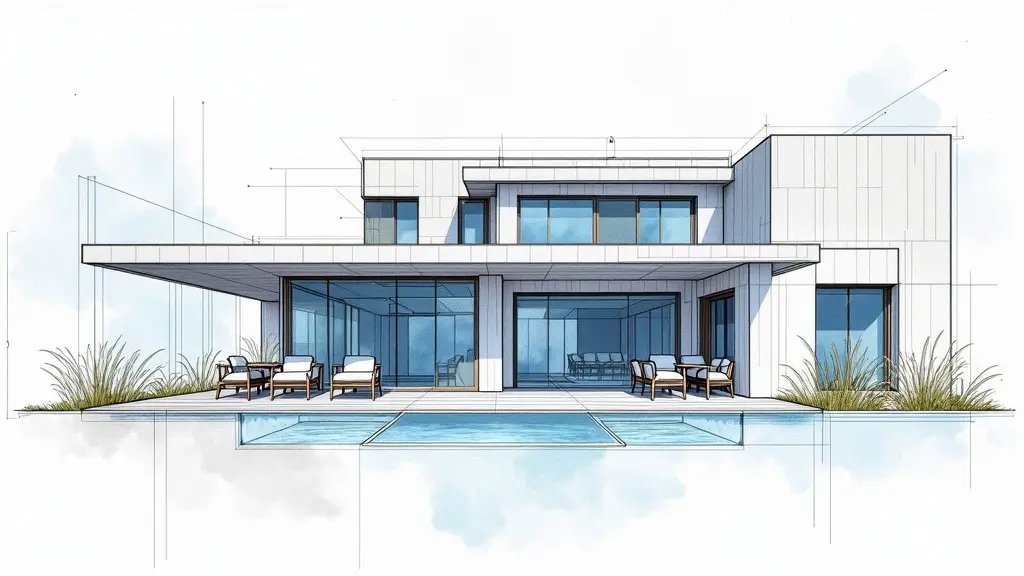
EXPERTISE — RESERVATIONS
You just received the developer’s letter. It announces the lifting of your reservations. Relieved, you check the apartment. And then, the shock: the crack on the terrace is still there, the living room floor tiles are warped, the bathroom waterproofing is leaking moisture. In Antibes, 1 in 3 owners discovers a persistent defect after a declaration of lifting reservations. The developer claims everything is fixed. You can clearly see it’s not. What to do when reality contradicts the paperwork?
What You See — and What It Really Hides
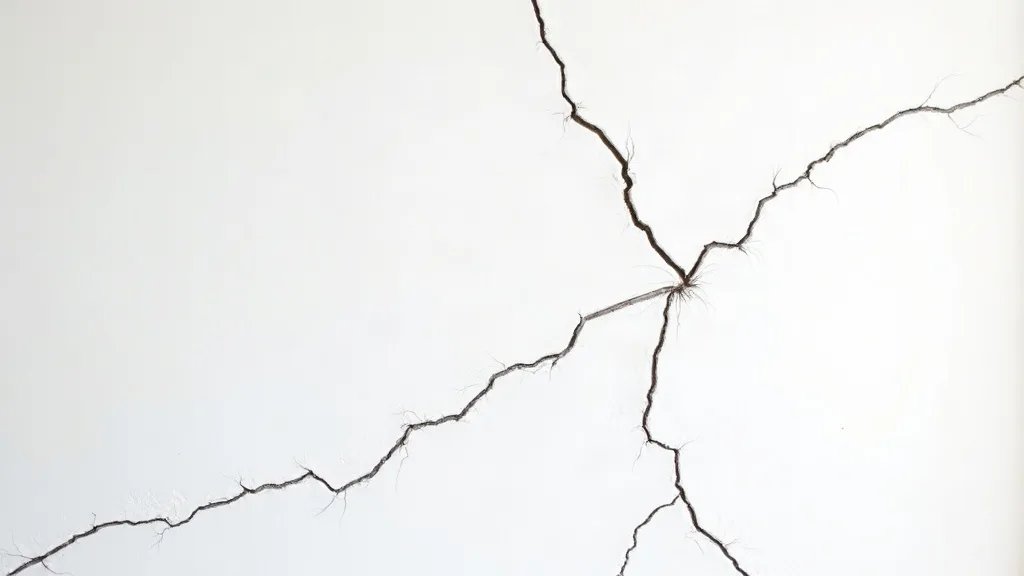
You see a fine 2 mm crack on the terrace wall. The developer says it’s cosmetic, fixed. In reality, this crack may be a symptom of differential slab settlement. On a case in Antibes last year, I measured a similar crack. By marking a reference, we observed an additional 0.5 mm widening over 6 months. It wasn’t a paint defect, but a structural movement. What no one tells you: a declaration of lifting reservations is not a technical assessment. It’s an administrative act. Only an expert, with their instruments, can attest that the defect is technically corrected within the tolerances allowed by the standard. Without that, the lifting of reservations has no value against the reality of the construction site.
Crack 1 Crack 2 Crack 3 ΔL₁ = 2.1 mm ΔL₂ = 1.8 mm Schematic diagram: facade cracking (horizontal cross-section) The red line shows the actual crack path. Dimensions measure deviation from theoretical alignment (blue dashed line).
The Deviation Calculation That Invalidates the Lifting of Reservations
Let’s take the concrete example of defective tiles on a 20 m² terrace in Antibes. The developer “corrected” the defect, but the tiles still show unevenness. The standard requires flatness. We measure with an optical level or a 2-meter straightedge. The maximum tolerance for a floor is 5 mm under a 2 m straightedge (reference DTU 52.1, French technical document for tiling). Imagine three measured points: height H₁ = 0 mm (reference), H₂ = +4 mm, H₃ = +7 mm. The maximum deviation is ΔH_max = |H₃ – H₁| = 7 mm. The local slope between points 2 and 3 is calculated: slope = (H₃ – H₂) / L × 100, with L = distance between points = 1 m. So slope = (7-4)/1000 × 100 = 0.3%. But the crucial verdict is on the deviation under the straightedge. 7 mm > 5 mm. The result is clear: non-compliant. What this means concretely: the lifting of reservations is technically unfounded. The flatness defect constitutes a construction defect under Art. 1792-6 of the French Civil Code, paragraph 1, which triggers the guarantee of perfect completion (garantie de parfait achèvement). Your visual observation turns into quantified evidence.
What Happens If You Do Nothing
In 6 months, the 2 mm crack on the terrace in Antibes will likely have doubled. Rainwater, sometimes carrying salty sea spray near the coast, will infiltrate. It will reach the steel reinforcement in the slab. Corrosion begins. In 2 years, concrete spalling will appear (accelerated carbonation). The warped tiles, left unrepaired, will have their joints completely unsealed. Infiltration on the underside may occur, threatening the ceiling below. Secondary pathology: mold growth. In 5 years, the repair cost is no longer a few thousand euros for regrouting and localized repair, but €15,000 to €30,000 for complete tile removal, reinforcement treatment, substrate reprofiling, and new installation with reinforced waterproofing. Not to mention the construction nuisance. The ten-year liability insurance (garantie décennale) can still be invoked, but the loss of use and property value will be real.
Recourse and Guarantees: What You Can Demand
Frankly, don’t stay idle. The applicable guarantee here is the guarantee of perfect completion (Art. 1792-6 of the French Civil Code), lasting one year from the acceptance of the works. The French Construction and Housing Code (CCH) L261-11, paragraph 2, specifies that this guarantee covers the repair of all defects reported as reservations. Your developer lifted the reservations? No matter, if the defect persists, the guarantee still runs. The procedure is timed: send a registered letter with acknowledgment of receipt to the developer, notifying them of the persistent defect and demanding repair within 30 days. Attach photos and, if possible, a simple initial metric survey. If they don’t respond, hire an independent expert (a surveyor or building expert). Their report, with measurements using a total station (precision ±1 cm) or laser distance meter, will be authoritative. If the developer refuses, legal action at the Grasse judicial court (tribunal judiciaire) is the next step. The judge will often appoint a court expert. In practice, in Antibes, a well-documented case by an expert leads to a settlement or court order for the developer to do the work in 8 out of 10 cases. You have the right to a compliant home. Demand it.
📅 Mis à jour le 18/08/2026 — Par Cassini Expertise, expert bâtiment indépendant 06 & 83. Devis gratuit : 04 22 46 06 04.
Questions fréquentes
Que faire si des travaux sont mal faits à Antibes ?
Si des travaux sont mal faits, vous devez d'abord envoyer une mise en demeure à l'entrepreneur par lettre recommandée avec accusé de réception, en détaillant les malfaçons. En cas de refus ou d'absence de réponse, vous pouvez saisir le tribunal judiciaire ou faire appel à un expert pour évaluer les dommages et obtenir une indemnisation.
Quels recours après la levée de réserves pour des travaux défectueux ?
La levée de réserves ne vous prive pas de vos recours pour les vices cachés ou les malfaçons non apparentes lors de la réception. Vous disposez d'un délai de 10 ans pour agir en garantie décennale contre les dommages compromettant la solidité de l'ouvrage ou le rendant impropre à sa destination.
Comment obtenir réparation pour des travaux mal réalisés à Antibes ?
Pour obtenir réparation, vous devez prouver la non-conformité des travaux par rapport au contrat ou aux règles de l'art. Rassemblez des preuves (photos, devis, rapports d'expertise), puis adressez une mise en demeure à l'entrepreneur. Si nécessaire, engagez une action en justice dans les délais légaux (garantie de parfait achèvement : 1 an, garantie biennale : 2 ans, décennale : 10 ans).
Cassini Expertise
Expert du bâtiment indépendant — Antibes (06·83·13·40)
📅 Mis à jour le 19/09/2026 — Cassini Expertise, expert bâtiment indépendant (06·83·13·40).