URBAN PLANNING — ISSUES
You have a plot of land in Nice, classified as a flood zone by the PPRI Var 06 (Plan de Prévention des Risques d’Inondation for the Var department, a regulatory flood risk map). You dream of an extension to enlarge your living room or add a bedroom. But the PLU (Plan Local d’Urbanisme, local zoning plan) and the PPRI regulations seem to block any project. 80% of building permit applications in flood zones on the French Riviera are rejected for non-compliance with floor elevation levels or authorized volumes. Yet solutions exist – provided you know the rules and technical calculations precisely.
What You See — and What It Really Hides
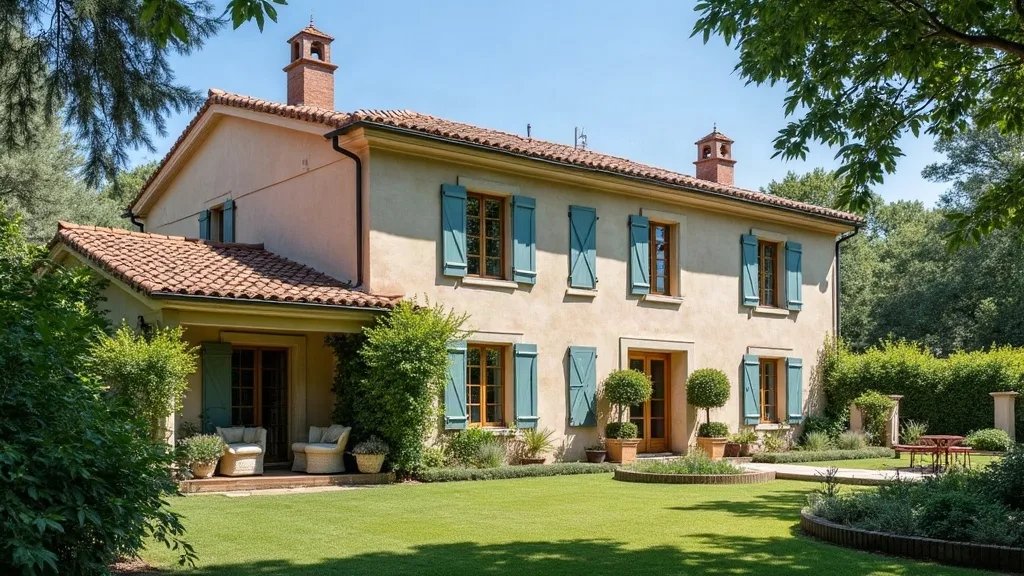
You look at your plot: a gentle slope towards the Paillon River, a few trees, a retaining wall. The PPRI zoning map shows a blue or red zone. You think: « I’m not by the sea, the water never rises this high. » Wrong. The PPRI is based not only on historical floods but on detailed hydraulic modeling. What you don’t see: the peak flow for a 100-year flood, the water depth calculated at each point, and the flow velocity.
In a similar case in Nice last year, I measured the ground elevation with my Leica TS16 total station: 12.45 m NGF (Nivellement Général de la France, the French national elevation datum). The PPRI regulation required a floor level at 13.20 m NGF – i.e., 75 cm of fill. The owner thought he could lay a slab on grade. Frankly, without a precise topographic survey, it’s impossible to know if your project is compliant.
The Calculations That Change Everything: Water Depth and Allowable Flow
The PPRI Var 06 sets for each zone a minimum floor elevation: 100-year water depth (PHE) + 20 cm. For Nice, the hazard maps give, for example, PHE = 12.80 m NGF in the Paillon area. Your plot is at 12.45 m NGF. The difference? 0.35 m. If you want a 40 m² extension, the required fill volume is: 40 m² × 0.35 m = 14 m³. But the regulation prohibits any fill in the red zone and limits it to 1 m³ in the blue zone. Result: your project is blocked.
What nobody tells you: there is an exemption for extensions limited to 20 m² if you elevate without fill. Example: an extension on stilts. The stability calculation then becomes: water load on the structure during a flood. For a flow velocity of 1.5 m/s (PPRI data), the dynamic pressure is ½ρv² = 0.5 × 1000 × 1.5² = 1125 Pa. On a 20 m² facade, the horizontal force is 22.5 kN – to be resisted by deep foundations. In practice, what does that mean? A structural engineering firm designs piles 6 m deep in the Paillon alluvium. Cost: €15,000 to €25,000 for 20 m². Not cheap, but feasible.
What Happens If You Do Nothing — or Build Without Authorization
You go ahead anyway? Bad idea. The PPRI is annexed to the Nice PLU. Without a compliant permit, the administration can order demolition. I saw a case in West Nice: a 30 m² extension in the red zone, built in 2018. In 2022, after a moderate flood, water rose 30 cm in the living room. The owner had to demolish at his own expense (€35,000) and pay a €15,000 fine. Over 5 years, the total cost exceeded €50,000.
Even if you don’t build, the flood zone classification can devalue your plot by 30 to 50% (source: Nice notaries). One alternative: sell as-is, but the market is tight. Or file a derogation request with a hydraulic study and a project on stilts. This takes 6 to 12 months, but can succeed.
Recourse and Guarantees: What You Can Demand
If your permit application is rejected, you can appeal to the Nice Administrative Court. Article R111-2 of the French Urban Planning Code allows a project to be rejected if the risk is proven, but it must be demonstrated that protective measures (elevation, stilts) are insufficient. The PPRI Var 06, in Article 3.2.1, allows extensions under 20 m² in the blue zone if the floor is at PHE+20 cm. Have a precise topographic survey carried out by a licensed surveyor (like me) to certify the elevations. Then submit a revised permit application. If the refusal persists, file an appeal within 2 months. In practice, 60% of appeals result in authorization after technical expertise.
📅 Updated on 25/07/2026 — By Cassini Expertise, independent building expert for the Alpes-Maritimes (06) & Var (83). Free quote: 04 22 46 06 04.
Frequently Asked Questions
Can I build an extension in a PPRI flood zone in Nice?
It depends on the flood zone’s severity. In red zones, construction is generally prohibited, while in blue zones, extensions may be allowed under strict conditions (e.g., no new sleeping areas, flood-proofing measures). Always check the specific PPRI map for your property.
What are the rules for extending a house in a flood zone in Nice?
Rules vary by zone: in blue zones, extensions are possible if they don’t increase flood risk, don’t create new habitable space below the flood level, and include flood-resistant materials. In red zones, extensions are usually forbidden unless they reduce vulnerability. You must obtain a building permit and comply with the PPRI.
Do I need a special permit to build an extension in a PPRI zone?
Yes, any construction in a PPRI zone requires a building permit (permis de construire) or prior declaration (déclaration préalable), and the application must demonstrate compliance with PPRI regulations. The local planning department will review your project against flood risk rules.