CONSTRUCTION — CRACKS
You have noticed a crack crossing your living room wall. It is thin, 2 mm, but it is growing. Antibes, clay soil, drought 2022. 80% of single-family homes on the French Riviera are affected by clay shrinkage and swelling. You are right to be concerned.
What You See — and What It Really Hides
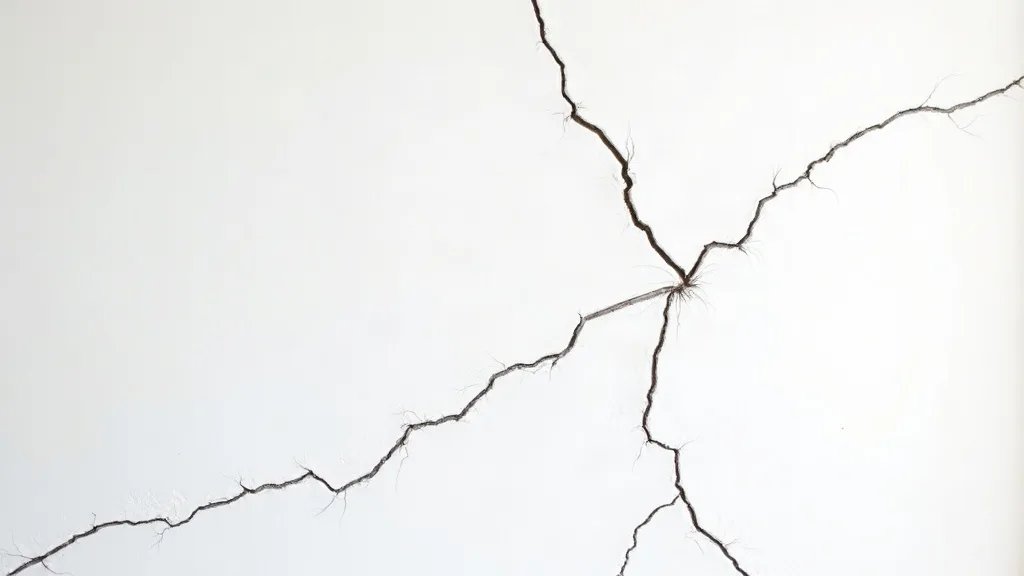
The crack is vertical, above a window. It looks superficial. But looking closely, it follows a masonry joint. The plaster is chipped. You measured it: 2 mm at the top, 1 mm at the bottom. What no one tells you: a 2 mm crack can indicate a differential settlement of 5 mm under the foundation. On a case in Antibes last year, I measured 8 mm of settlement under a villa corner. The owner had waited a year. The repair bill was €45,000.
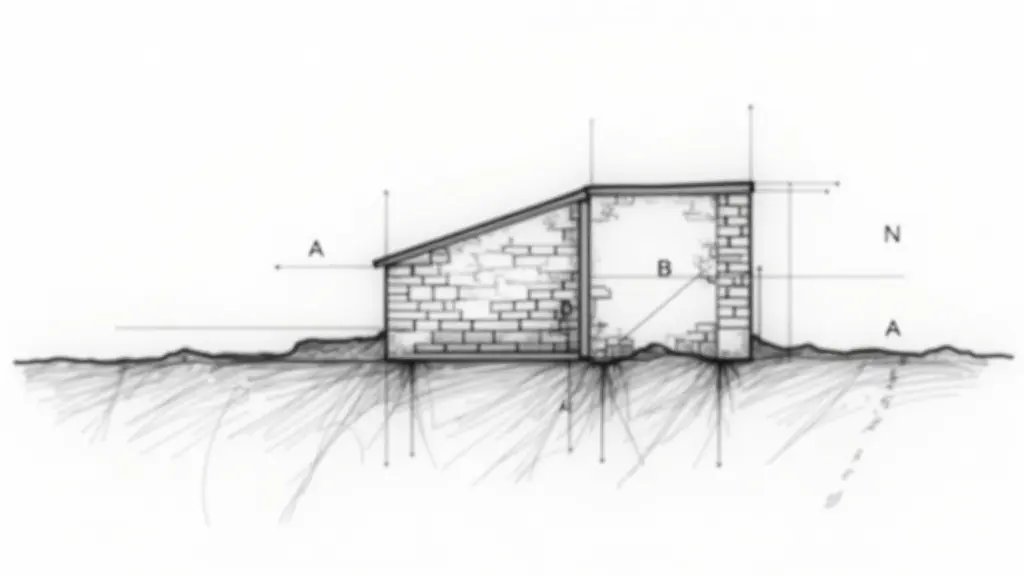
Clay soil, when dry, shrinks. When it rains, it swells. This cyclic movement fatigues the foundations. In Antibes, the BRGM (French Geological Survey) indicates a high hazard in the Badine and Cap areas. The map is clear: your house is in a medium to high exposure zone. But that’s not all. The slope of the land, wall orientation, and foundation depth play a key role. A simple glance is not enough.
The Calculations That Change Everything: Shrinkage vs. Bearing Capacity
The phenomenon is mechanical. The stress under the foundation is σ = F/A. For a typical house in Antibes (load 150 kN per linear meter, footing width 0.5 m), σ = 150,000 / 0.5 = 300 kPa. Dry clay soil has a bearing capacity of 200 kPa according to Eurocode 7 (section 6.5.2). 300 > 200: the soil creeps. Settlement is expressed by: s = (σ · H) / E, with H thickness of clay layer (3 m) and E oedometric modulus (5 MPa). So s = (300,000 · 3) / 5,000,000 = 0.18 m = 18 cm. In reality, shrink-swell amplifies this settlement. The BRGM clay map (interactive) gives a linear shrinkage potential of 2 to 4 cm per meter depth. For a foundation at 1 m, the vertical movement can reach 3 cm. What this means concretely: a 2 mm crack today can become 1 cm in 5 years if the soil continues to dry. The French standard XP P95-100 (section 4.2.1) sets a threshold of 5 mm for facade cracks before triggering repairs. You are below that, but early diagnosis is crucial.
What Happens If You Do Nothing
In 6 months, the crack reaches 3 mm. In 2 years, 8 mm. Windows start sticking. Tiles lift. At 5 years, the load-bearing wall may show structural disorder. The repair cost goes from €5,000 (resin injection) to €50,000 (micropiles). I saw a villa in Antibes Juan-les-Pins where the owner waited 3 years. The slab settled by 4 cm. Bill: €78,000.
Secondary pathologies are common: water infiltration through cracks, mold, detachment of coatings. On the French Riviera, ambient humidity worsens the damage. Not to mention property devaluation: a cracked house loses 20 to 30% of its value at resale.
Recourse and Guarantees: What You Can Demand
You are covered by the ten-year liability (“garantie décennale”) if the disorder compromises the solidity of the structure (10 years after completion). Eurocode 7 (section 2.4.2) requires a soil study prior to any construction in clay zones. If the developer did not do it, their liability is engaged. The French standard XP P95-100 (section 5.1) defines repair methods. Procedure: registered letter with acknowledgment of receipt to the builder, then judicial expertise at the Grasse court. Meanwhile, a diagnosis by an independent expert (like me) will allow you to quantify the disorders and prepare your file. Do not delay: the statute of limitations is 10 years from completion.
📅 Mis à jour le 05/08/2026 — Par Cassini Expertise, expert bâtiment indépendant 06 & 83. Devis gratuit : 04 22 46 06 04.
Questions fréquentes
Why do house cracks appear in Antibes on clay soil?
House cracks in Antibes often result from clay soil shrinkage and swelling due to moisture changes. During dry periods, clay contracts, causing foundation settlement and wall cracks. Heavy rains then swell the soil, leading to further movement and recurring damage.
How to fix cracks in a house built on clay soil?
First, stabilize the soil moisture by improving drainage and installing a French drain or soaker hose around the foundation. Then, repair cracks with epoxy injections or flexible sealants. For severe cases, consult a structural engineer to consider underpinning or helical piers to reach stable soil.
Are house cracks on clay soil covered by insurance in France?
French home insurance may cover cracks if they are caused by drought and clay shrinkage, which is recognized as a natural catastrophe (cat nat). You must file a claim within 10 days of the official declaration. However, coverage varies, so check your policy and contact your insurer promptly.
Cassini Expertise
Expert du bâtiment indépendant — Antibes (06·83·13·40)
📅 Mis à jour le 19/09/2026 — Cassini Expertise, expert bâtiment indépendant (06·83·13·40).