\n
URBAN PLANNING — PROBLEMS
You built a wooden terrace last summer, and while checking your building permit, you realize it extends 1.20 meters beyond the allowed ground coverage. In Nice, even a minor non-compliant extension can trigger an urban planning inspection. A neighbor has already reported a roof overhang to the east, and the city hall is strict about the Local Urban Plan (PLU).
What You See — and What It Really Hides
\n
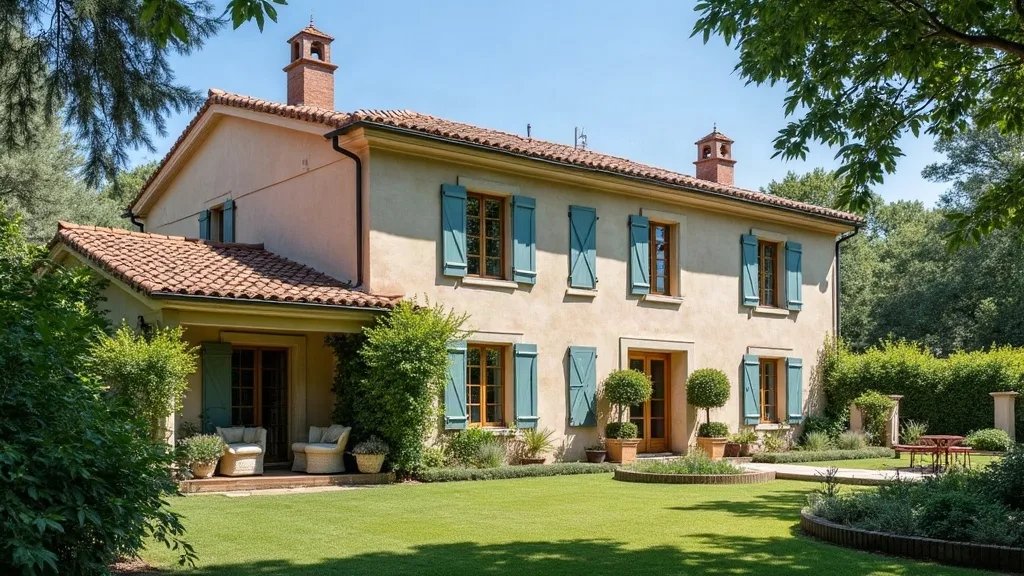
You measure your terrace with a tape measure: 4.50 m by 3.00 m, i.e., 13.50 m². Your permit plan shows a ground coverage of 80 m² for the house. But what you don’t know is that ground coverage is calculated as the vertical projection of all enclosed and covered areas, including roof overhangs exceeding 0.50 m. Your terrace, although open, is covered by a fixed pergola: it therefore counts toward ground coverage.
In a case in Nice last year, I measured a villa where the owner had added 18 m² of covered terrace without a declaration. Result: an official violation report and an obligation to demolish within 6 months. What no one tells you: the Nice city hall now uses aerial photos and LiDAR surveys to detect discrepancies. A simple look at Géoportail (French geographic portal) is not enough to defend yourself.
The Calculation That Changes Everything: Does the Ground Coverage Exceed the Threshold?
The Nice PLU (Local Urban Plan), Article 9, sets the maximum ground coverage at 40% of the land area for standard urban zones (UA). Your plot is 250 m², so the allowed ground coverage is 100 m². Your house is 80 m², your covered terrace is 13.50 m², and you have a 6 m² awning by the garage. Total: 99.50 m². You are under the limit, but the error comes from the pergola: it is fixed and covered, so it is included. Without it, you would be at 86 m².
But be careful: Article L421-1 of the French Urban Planning Code (Code de l’urbanisme) requires a prior declaration for any creation of ground coverage between 5 and 20 m². Your 13.50 m² terrace should have been declared. In practice, this means you risk a fine of €1,200 (minimum) and an obligation to demolish if the city hall considers that the extension is not integrated into the existing building. What this means concretely: you must file an ex-post regularization request, with a precise topographic plan referenced in Lambert 93 (French coordinate system).
What Happens If You Do Nothing
Within 6 months, you will receive a letter from the Nice city hall inviting you to regularize. If you ignore it, the urban planning department can draw up a violation report and refer the matter to the judicial court. Lawyer and expert fees can reach €5,000, not including possible demolition (€2,000 to €4,000 for a wooden terrace).
In the longer term, when selling, the notary will detect the non-compliance on the urban planning certificate. The buyer may request a price reduction or withdraw. In a tight Nice market, such non-compliance can reduce the property value by 10 to 15%.
Recourse and Guarantees: What You Can Demand
You have two options: file a prior declaration for regularization (if the total ground coverage remains under the PLU threshold) or request a modified permit if the area exceeds 20 m². In both cases, a topographic survey using a Leica TS16 total station, tied to RGF93/Lambert 93 and NGF-IGN69 (French geodetic and leveling systems), is essential to justify the dimensions. The Nice PLU (Art. 9, paragraph 2) requires that ground coverage be calculated from a dimensioned plan signed by a licensed surveyor (expert en urbanisme). Get assistance from an independent expert to negotiate with the city hall. For other cases of non-compliance, see our guide on PLU non-compliance in Nice. If your land is sloping, also read how to calculate ground coverage on sloping land.
📅 Mis à jour le 24/07/2026 — Par Cassini Expertise, expert bâtiment indépendant 06 & 83. Devis gratuit : 04 22 46 06 04.
Questions fréquentes
What happens if my terrace exceeds the allowed ground coverage in Nice?
If your terrace exceeds the permitted ground coverage, you risk a fine, an injunction to demolish or regularize the structure, and potential legal issues. The city may also refuse any future permits until the violation is resolved.
Can I regularize an illegal terrace in Nice?
Yes, regularization is possible if the terrace complies with current urban planning rules. You must submit a regularization permit (permis de régularisation) to the mairie, which will review the project against local zoning and coverage limits.
What is the maximum ground coverage allowed for terraces in Nice?
The maximum ground coverage depends on the zone's PLU (Plan Local d'Urbanisme). It typically ranges from 30% to 50% of the plot area, but you must check the specific rules for your property's zone in the PLU of Nice.
\\n