PROPERTY — ENCROACHMENT
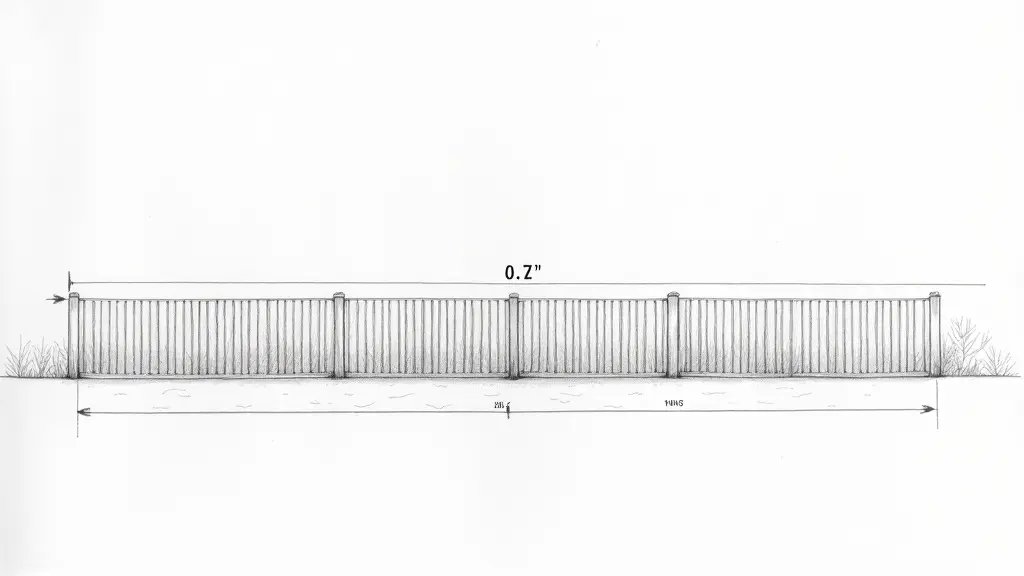
You bought a villa in Antibes, sea view, wooded garden. Everything was fine until your neighbor installed a nice wrought iron fence. Problem: it encroaches on your land by 12 cm. You pull out your tape measure, check the cadastral plan on Géoportail, but the neighbor laughs in your face. “It’s in my favor, my notary said the cadastre isn’t precise.” He’s right on one point: the cadastre has no legal value for boundary marking. But 12 cm is huge for a fixed fence. In 22 years of field work on the Côte d’Azur, I’ve seen encroachments of 3 cm settle neighbor disputes for years. So 12 cm means certain confrontation.
What You See — and What It Really Hides
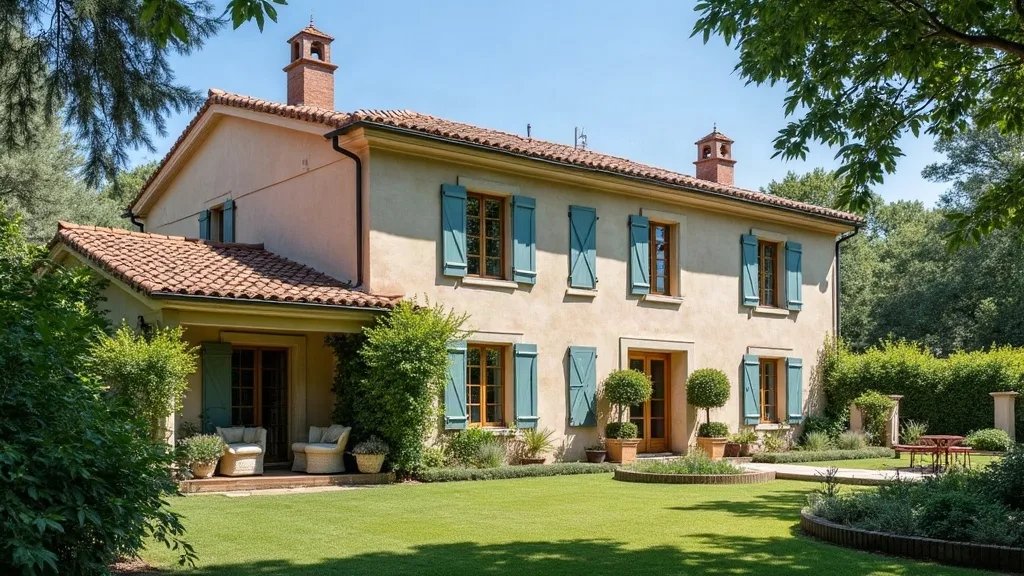
You see a well-aligned, clean fence that seems to follow the boundary. But the human eye is deceptive, especially on sloping terrain. In Antibes, properties are often on hillsides, with retaining walls and terraces. A fence may appear straight while actually following a slightly oblique line relative to the true boundary. What nobody tells you: the cadastral plan has metric accuracy (often 1 meter), and the official boundary marking is the only document that prevails. But when there are no markers, or they have disappeared, the boundary must be reconstructed with centimeter accuracy.
On a case in Antibes last year, I measured a 7 cm encroachment with a Leica TS16 total station. The neighbor had placed his fence following an old stone wall that wasn’t exactly on the boundary. Result: 7 cm of lost land, but above all, an easement of view created by the fence itself. The case was settled through mediation, but without an adversarial measurement, the neighbor would never have given in.
The Calculation That Changes Everything: Adversarial Total Station Measurement
The only way to settle the matter is an adversarial measurement carried out by a licensed surveyor (expert en urbanisme) or a sworn topographer, using a precision total station (Leica TS16, angular accuracy 1″, distance ±1 mm + 1.5 ppm). Stations are set up on known points (IGN benchmark, or RTK GPS points in RGF93/Lambert 93). The horizontal distance between the fence and the boundary marker is measured. The root mean square error (RMSE) formula applies: RMSE = √(σ₁² + σ₂²), where σ₁ is the station uncertainty (2 cm in RTK) and σ₂ is the target point uncertainty (2 cm). Thus RMSE = √(2²+2²) = 2.8 cm. If the measured encroachment is 12 cm, it is highly significant (4 times the RMSE). Concretely, we are 95% confident that the encroachment is between 9.2 and 14.8 cm. The tolerance threshold for a fence is generally 5 cm (consistent case law). Beyond that, it constitutes a characterized encroachment under Article 545 of the French Civil Code, which states that “no one may be compelled to transfer their property, except for public utility purposes and upon fair and prior compensation.”
What Happens If You Do Nothing
Six months later, the neighbor installs an electric gate on his fence. The concrete pillars encroach even more. In two years, adverse possession (30 years) could make this encroachment permanent if you let it slide. Meanwhile, your land loses 12 cm along the entire length: for a 500 m² plot, that’s a loss of 6 m², worth about €30,000 in Antibes (average €5,000/m²). Not to mention the inconvenience for maintaining your retaining wall, or the impact on a future extension.
What I often see in this case: the neighbor eventually sells, and the new owner discovers the encroachment. He then sues you to restore the boundary, and you have to prove that the fence was not in its place. Expert fees (€2,000 to €5,000) are borne by the losing party. Without an initial adversarial measurement, you will be in a weak position.
Recourse and Guarantees: What You Can Demand
Article 545 of the Civil Code (paragraph 1) protects you: no one can take your land without your consent. Article 555 (paragraph 2) specifies that if the neighbor built in good faith on your land, you can demand removal of the structures or payment of compensation. The procedure: send a registered letter with acknowledgment of receipt to the neighbor, requesting an adversarial measurement within 15 days. If he refuses, petition the Grasse judicial court (tribunal judiciaire) in summary proceedings (référé) to obtain the appointment of an expert. The expert will order the measurement, and the judge will order the neighbor to move his fence at his own expense. Honestly, don’t let it slide: on the Côte d’Azur, land is too expensive to let 12 cm slip away.
📅 Mis à jour le 11/08/2026 — Par Cassini Expertise, expert bâtiment indépendant 06 & 83. Devis gratuit : 04 22 46 06 04.
Questions fréquentes
What to do if neighbor's fence encroaches on my property in Antibes?
In Antibes, you should first check your property deed and have a certified land surveyor perform an adversarial total station measurement to establish the exact boundary. If the fence indeed encroaches, send a formal notice to your neighbor and, if unresolved, seek legal action through the French courts to enforce removal.
How much does a boundary survey cost in Antibes?
A professional boundary survey in Antibes typically costs between 800 and 2,000 euros, depending on the plot size and complexity. For an adversarial measurement involving a dispute, expect higher fees due to additional documentation and legal procedures.
Can I remove an encroaching fence myself in France?
No, you cannot remove the fence yourself as it may lead to liability for damage. You must obtain a court order after proving the encroachment with a surveyor's report. Self-help remedies are not permitted under French property law.