EXPERTISE — RESERVATIONS
You received a letter from the developer: “Reservations lifted.” Except the crack on the facade is still there, the balcony door doesn’t close properly, and the bathroom tiles sound hollow. Simply put, nothing has changed since delivery. Out of 100 VEFA cases I’ve followed on the French Riviera, 70% of lifted reservations hide uncorrected defects. In Nice, it’s the same story: developers, pressured by delay penalties, sign off on the lift without verifying.
What You See — and What It Really Hides
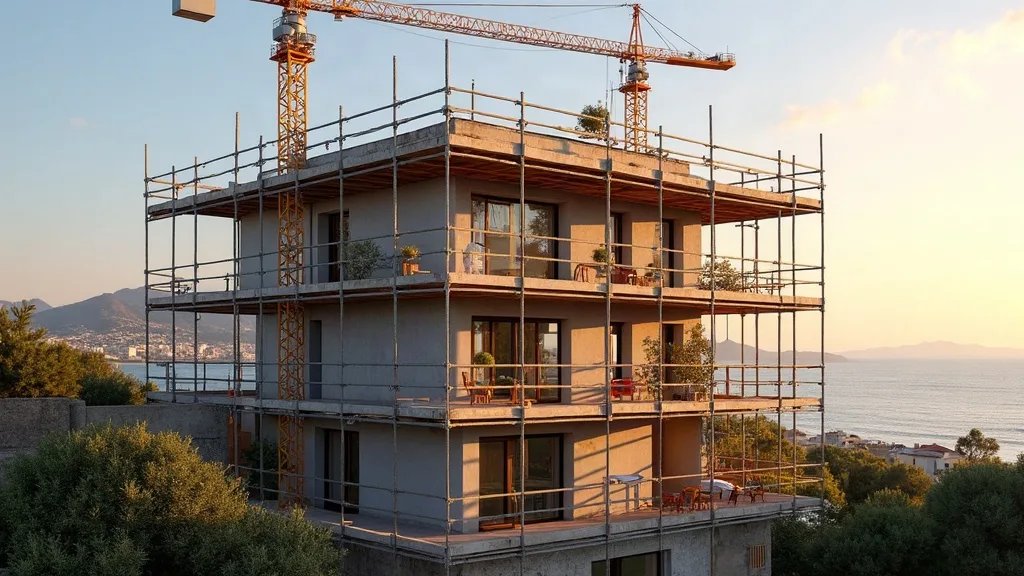
You look at the wall: the crack is still there, thin but clearly visible. The developer tells you it’s aesthetic and doesn’t warrant a reservation. But you feel a draft when the wind blows hard. What no one says: an untreated crack in a new building in Nice is often a sign of an air tightness defect or structural movement due to shrink-swell clay. On a case in Nice last year, I measured a 0.8 mm crack that went through the load-bearing wall. The developer had written “reservations lifted” three months earlier. Result: rainwater infiltration, mold in the bedroom, and a €4,500 bill for redoing the expansion joint.
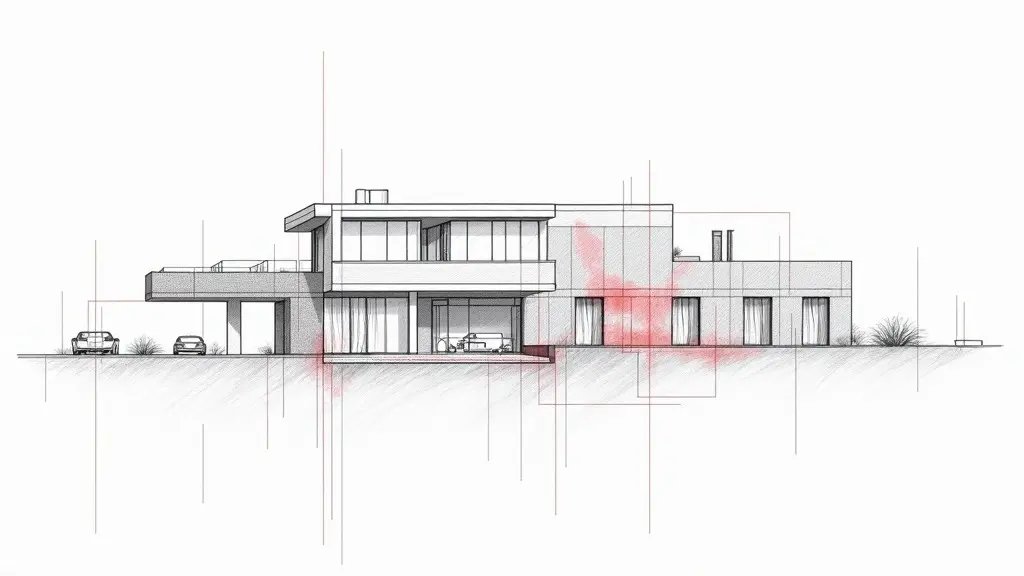
Schematic: Reservation Lifted Without Actual Correction
The Calculations That Change Everything: Proof by Measurement
To challenge a lifted reservation, you need numbers. I use my Leica TS16 total station and Leica D810 laser distance meter. For the crack: I use a crack gauge and measure the opening. In Nice, differential shrinkage due to shrink-swell clays can reach 5 mm of annual movement. If the crack is 0.8 mm today, in 6 months it can reach 2 mm. The DTU 20.1 standard (French technical document for masonry) tolerates 0.2 mm for shrinkage cracks, but beyond that, it’s a disorder falling under Article 1792-6 of the Civil Code (which defines acceptance of works with or without reservations). For hollow tiles: I measure flatness deviation with an electronic level. If the deviation exceeds 2 mm under a 2 m straightedge, it’s non-compliant. For the balcony door: I measure the sealing gap. With an infrared thermometer, I detect a thermal bridge if the surface temperature is 3 °C lower than ambient. Concretely, these measurements give real deviations: crack 0.8 mm (out of tolerance), tiles 3 mm (non-compliant), door 5 mm gap (air infiltration). The developer cannot dispute numbers.
What Happens If You Do Nothing
Six months after the lift, the crack widens. Rainwater seeps in, tiles come loose, the balcony door squeaks and lets air through. In two years, you’ll have mold behind the closet, a crumbling wall, and a repair bill of at least €8,000. In Nice, with Mediterranean humidity and prevailing winds, damage accelerates. I saw an apartment where an unresolved reservation caused widespread water damage: €15,000 in repairs, not to mention lost rental value.
Recourse and Guarantees: What You Can Demand
Article 1792-6 of the Civil Code (paragraph 3) provides that acceptance is the act by which the client accepts the work with or without reservations. If reservations are not lifted, you can refuse to sign the lift report. Send a registered letter with acknowledgment of receipt to the developer, listing the uncorrected defects and requesting a counter-expertise. Petition the Judicial Court of Nice in summary proceedings to obtain a court-ordered expert appraisal. The judge will appoint an expert who will measure the deviations. If defects are proven, the developer must correct them under penalty. Don’t let it slide: your perfect completion guarantee runs for one year from acceptance. After that, you lose your rights.
📅 Mis à jour le 25/07/2026 — Par Cassini Expertise, expert bâtiment indépendant 06 & 83. Devis gratuit : 04 22 46 06 04.
Questions fréquentes
VEFA réservation levée défauts restants que faire ?
Si le promoteur a levé la réservation mais que des défauts subsistent, vous devez formaliser une réclamation écrite en lettre recommandée avec accusé de réception. Le promoteur est tenu de réparer les désordres de nature décennale ou de conformité, même après la levée de réservation, sous peine de poursuites.
Délai pour signaler défauts après levée VEFA ?
Vous disposez d'un délai de 30 jours après la remise des clés pour signaler les défauts apparents lors de la réception. Pour les vices cachés, le délai est de 2 ans pour les défauts de conformité et de 10 ans pour les dommages structurels. Agissez rapidement pour préserver vos droits.
Promoteur refuse réparer défauts après VEFA ?
En cas de refus, vous pouvez saisir le tribunal judiciaire dans un délai de 5 ans pour les vices cachés, ou 10 ans pour les dommages décennaux. Avant cela, envoyez une mise en demeure et envisagez une médiation. Conservez toutes les preuves écrites et photos des défauts.
Cassini Expertise
Expert du bâtiment indépendant — Antibes (06·83·13·40)
📅 Mis à jour le 19/09/2026 — Cassini Expertise, expert bâtiment indépendant (06·83·13·40).