RGA drought subsidence claims: understanding the mechanism before starting the procedure
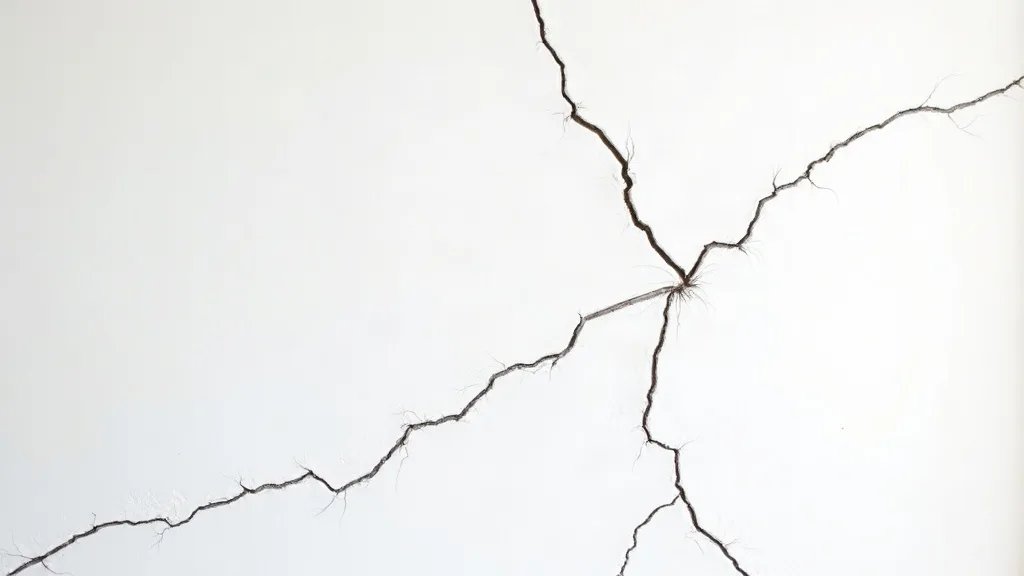
Clay shrink-swell (RGA) hits homeowners in the Alpes-Maritimes (06) and the Var (83) hard, often without warning. After a scorching summer, clay soils contract and pull support away from foundations. Structural cracks appear on walls, floors come away from their supports, and window and door frames jam. One question keeps coming up: “How do I get compensation for drought damage?”
The answer lies in the CATNAT (Natural Disaster) procedure.
This process is anything but simple.
Here is the step-by-step guide to maximising your chances of compensation, with a specific focus on local practices in the 06 and 83 départements.
Step 1: Check the natural disaster order (the essential condition)
Without an interministerial order published in the Official Journal, no drought compensation is possible. This text officially recognises the state of natural disaster for a given municipality and a specific period.
How do I check the list of recognised municipalities?
Go to the Géorisques website. Search for your municipality (Nice, Cannes, Grasse, Toulon, Draguignan, Fréjus…). Check that your town is indeed listed for the phenomenon “Differential ground movement caused by drought and soil rehydration”. A key point to watch in the 06 and 83: orders are often issued in successive waves. A municipality may be recognised one year and not the next. Also check that the start date of the claim (corresponding to the drought period) does indeed cover the period in which you noticed the cracks appearing.
If your municipality is not recognised, you can still pursue informal and hierarchical appeals with the ministry. It will be a long battle. Hence the value of a solid technical file to back up your request — which usually means calling in an RGA and CATNAT expert to build your case.
Step 2: Reporting the claim to your insurer (strict deadlines)
As soon as the order is published in the Official Journal (not the day the damage occurred), a legal deadline of 30 calendar days begins. Send a registered letter with acknowledgement of receipt to your insurer, titled “Drought / Natural Disaster Claim Declaration”.
A point to watch: don’t confuse “declaration” with “request for expert assessment”. The official declaration must follow proper procedure. Keep proof of submission carefully. In the Var and Alpes-Maritimes, insurers receive hundreds of claims. An imprecise declaration sometimes ends up handled last, or poorly processed.
Step 3: The adversarial expert assessment phase
Your insurer usually appoints a loss adjuster to assess the damage. Be careful: this technician works on behalf of the insurance company. Their job is to confirm the link between the drought and the cracks, under the terms of the CATNAT policy.
The key role of an independent private expert in defending your case
This distinction is crucial. The insurer’s expert is primarily looking to minimise the cost of the claim. If your property is in a clay-sensitive zone, call in an independent building expert. This neutral expert, such as Maître Cassini, will carry out a counter-assessment of the insurer’s expert’s conclusions.
Why does this matter so much? Because RGA assessment is technical and complex. It requires: – Topographic surveys to measure ground movement. – Core sampling or soil testing to determine clay content and soil depth. – Crack analysis: angle, width, and progression over time.
A point to watch: if the insurer’s expert concludes there was a “lack of maintenance” or “old construction”, your drought compensation claim is refused. An adversarial counter-assessment, based on local geological data, can overturn the decision. The solution: commission an independent RGA and CATNAT assessment as soon as the insurer’s expert makes their first visit. It’s the only way to hold your ground in the technical debate.
Step 4: The compensation offer and repair works
If the drought cause is recognised, the insurer applies the statutory deductible. This deductible is set by the State (usually between €1,500 and €3,000, or the amount specified in your policy if more favourable). It can increase if a prefectural order imposes prevention measures that were not followed.
Compensation amounts in PACA
The sums involved vary widely depending on the extent of the damage. In the 06 and 83, we see compensation ranging from €8,000 to over €150,000 for homes requiring micropiles or foundation reinforcement. For a non-structural crack, expect between €15,000 and €25,000 for facade and joint repairs.
Be aware that compensation must cover:
- Underpinning work (the largest expense item).
- Repairs to masonry and rendering.
- Restoration of cracked floors and interior partitions.
- Relocation and accommodation costs if the house is uninhabitable.
- Project management fees (architect or structural engineer).
- Dry-stone wall collapse in Grasse: Eurocode 7 stability calculation
A point to watch: never sign the insurer’s expert report without your own expert’s approval. Once signed, the compensation is final. There’s no going back afterwards to claim additional costs.
Local specifics: the context in the 06 and 83
Soils in the Alpes-Maritimes and Var feature highly heterogeneous clay pockets. In the Nice hinterland (Pays de Grasse, inland Alpes-Maritimes) and in the upper Var, swelling clays are frequently mixed with limestone. These areas become highly sensitive as soon as the ground alternates between heavy rainfall (spring, autumn) and intense drought (summer).
Risk areas to check
RGA exposure maps show that Roquebrune-sur-Argens, Puget-sur-Argens, and parts of the Siagne valley are in moderate to high exposure zones. In mountain areas, the phenomenon takes a different form but remains very real: ground shrinkage can cause sudden differential settlement under foundations.
One last crucial point for the region: processing times. Expect 6 to 9 months between the declaration and the compensation offer. This can stretch further if the case is complex or appeals are needed. So don’t delay starting the process, and keep an eye on how the cracks develop. Install plaster witness marks to prove they are worsening over time — essential evidence for the assessment.
Getting ahead of the game: legal protection and choosing your expert
Prepare your file by gathering all recent work invoices, dated photos, and local weather records. If you notice cracks, don’t touch them: they need to stay visible for the assessment.
The best strategy is to act early. Calling in an independent expert before the insurer’s visit even happens helps build an irrefutable body of evidence.
It’s also a way to check that the type of cracking observed is indeed caused by RGA, and not another phenomenon (settlement, landslip) which would then be excluded from the CATNAT scheme.
This pre-diagnosis is particularly useful in the South of France, where vegetation (poplars, cypress trees) worsens moisture uptake from the soil near foundations.
A demanding but essential process
Getting drought compensation through the CATNAT procedure is far from a simple formality. Technical and administrative requirements get stricter every year. Insurers scrutinise every detail to weed out incomplete or imprecise files.
If your property has been damaged, or if you’re preparing a file for a sale (an increasingly common situation given the Carrez law and technical diagnostics), don’t leave anything to chance. Surround yourself with an independent technical perspective, expert in local building pathologies.
Not sure about the nature of your cracks? Received a compensation offer you think is too low? Has a municipality in the Nice or Var hinterland just been recognised as a natural disaster area?
For a personalised, no-obligation assessment of your situation, call 04 22 46 06 04 directly. A clear, fast response to protect your property.
Need an expert? Contact us on 04 22 46 06 04 — free quote within 48h.
📅 Updated on 20/08/2026 — By Cassini Expertise, independent building expert for the 06 & 83. Free quote: 04 22 46 06 04.
To find out more:
Frequently asked questions
How do I declare a drought CATNAT claim?
To be compensated, declare the claim to your insurer within 30 days of the CATNAT order being published in the Official Journal. Use the claim declaration form, specifying the nature of the damage and the date it appeared. Keep evidence (photos, quotes, expert reports).
What are the timeframes for drought compensation?
After you submit your declaration, the insurer has 3 months to send their compensation offer, unless an expert assessment is required — which can extend the timeframe. Once the offer is accepted, payment follows within 15 days. If you disagree, you can refer the matter to the conciliation board.
What is RGA in relation to drought?
RGA (Retrait-Gonflement des Argiles, or clay shrink-swell) refers to ground movement caused by drought, which can damage foundations. It is recognised as a natural disaster if a CATNAT order is published for your municipality, which entitles you to compensation for the damage through your home insurance.
Cassini Expertise
Expert du bâtiment indépendant — Antibes (06·83·13·40)
📅 Mis à jour le 25/09/2026 — Cassini Expertise, expert bâtiment indépendant (06·83·13·40).