RE2020 now applies to public buildings: a financial challenge for local authorities
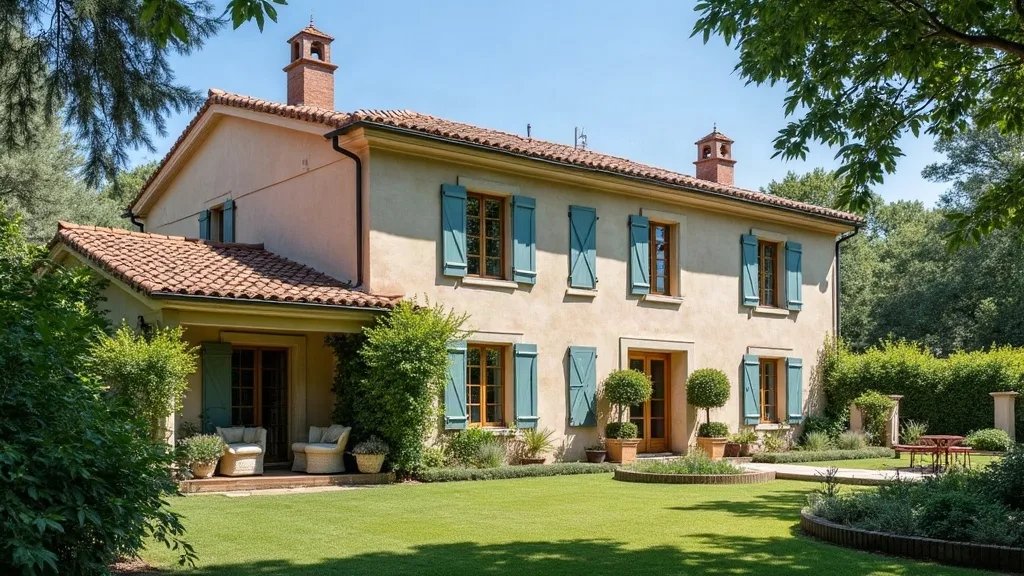
Since July 2026, the RE2020 environmental regulation now applies to almost all new public buildings built by local authorities. This extension, announced by the French government, aims to cut the building sector’s carbon footprint — but it represents a significant additional cost for towns, intercommunal bodies and departments, particularly across the Alpes-Maritimes (06) and the Var (83).
Which buildings are affected?
RE2020 applies to schools, town halls, libraries, gyms, swimming pools, technical centres and other public facilities. Local authorities must now meet strict requirements on insulation, heating, ventilation and bio-based materials. A new school in Antibes or a media library in Cannes, for example, will have to meet very low energy-consumption thresholds, with greater reliance on renewable energy.
An estimated 10-20% extra cost
According to early studies, the extra cost linked to RE2020 for a public building can reach 10 to 20% of the initial budget. For a mid-sized town such as Grasse or Nice, that can mean several hundred thousand euros in additional spending. Local authorities therefore need to revisit their financing plans, often by seeking grants from the State or regional bodies. In the Var, renovation projects for existing buildings are also affected, since RE2020 imposes stricter standards for extensions and major renovations.
Technical and topographical challenges
As a building expert and topographer, I can confirm that RE2020 calls for a detailed reading of the site. In the Alpes-Maritimes, topographical constraints (slopes, sun exposure, seismic risk) directly shape building design. A school built on a hillside in Cannes, for instance, will need to optimise its orientation to maximise passive solar gain while meeting seismic regulations. Likewise, in the Var, flood-prone areas or clay soils require thorough geotechnical surveys to avoid structural defects.
How can local authorities adapt?
To keep costs under control, we recommend:
- Carrying out an upfront technical and financial feasibility study, including a precise topographical survey.
- Favouring local, bio-based materials such as wood or straw, which meet RE2020 requirements while supporting the regional economy.
- Installing high-performance heating systems (heat pumps, biomass boilers) and dual-flow ventilation.
- Planning administrative procedures early to secure funding (Fonds vert, CEE, etc.).
Conclusion: a major issue for local areas
RE2020 is a necessary environmental step forward, but it demands rigorous public budget management. Local authorities in the Alpes-Maritimes and the Var need to bring in experts to balance energy performance, local constraints and cost control. For any construction or renovation project, don’t hesitate to call in a professional.
Cassini Expertise — Independent building expert and topographer. Contact: 04 22 46 06 04 — Serving the Alpes-Maritimes (06) and the Var (83).
📅 Updated on 08/08/2026 — By Cassini Expertise, independent building expert 06 & 83. Free quote: 04 22 46 06 04.
Go further:
- Thermal bridging & condensation in Nice: RT2012 temperature factor calculation
- 2026 Energy Performance Diagnostic (DPE) in the Alpes-Maritimes: new rules and challenges (2)
Frequently asked questions
What is RE2020?
RE2020 is the French environmental regulation that succeeds RT2012. It aims to reduce the carbon impact of new buildings by setting requirements on energy performance, summer comfort, and life-cycle analysis.
What impact does RE2020 have on public buildings?
Public buildings must meet stricter primary energy consumption thresholds, incorporate bio-based materials to cut their carbon footprint, and plan for overheating risks. This can raise initial construction costs but delivers long-term energy savings.
How can local authorities comply with RE2020?
Local authorities need to adapt their projects upstream, favouring bioclimatic design, renewable energy use and low-impact materials. They can also apply for financial aid and rely on expert engineering firms to optimise their technical and economic choices.
Cassini Expertise
Expert du bâtiment indépendant — Antibes (06·83·13·40)
📅 Mis à jour le 25/09/2026 — Cassini Expertise, expert bâtiment indépendant (06·83·13·40).