Rising Damp in the Historic Fabric of Old Antibes
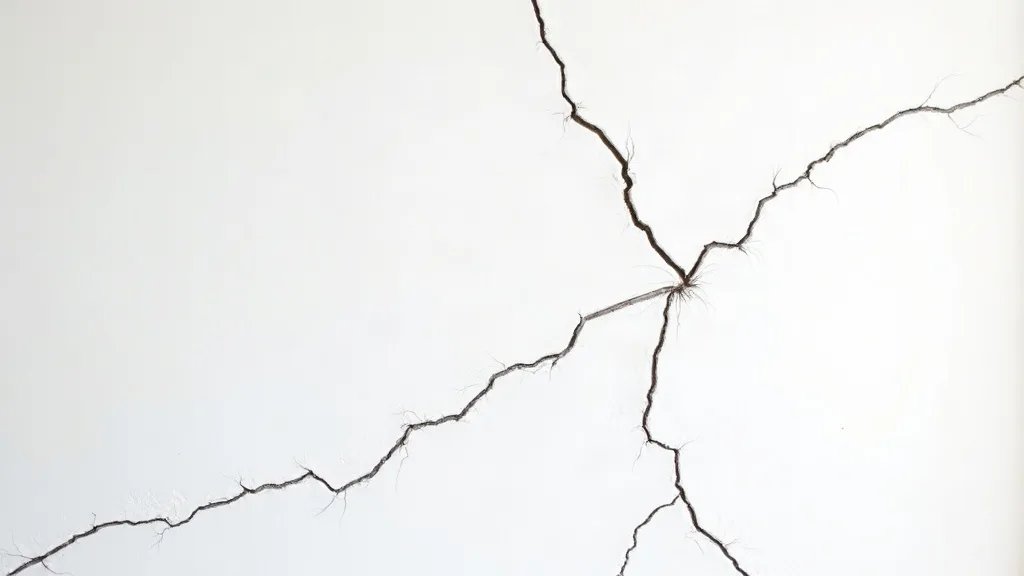
The rubble-stone limestone walls of Antibes’ old town frequently show signs of rising damp: dark staining at the base of walls, white saline efflorescence, and rendering that detaches from the surface. This phenomenon, known as capillary rise, results from groundwater ascending through the pores of the stone. The absence of a damp-proof barrier — typical of buildings constructed before the 20th century — allows water to migrate vertically to heights that can reach or exceed one metre.
Technical diagnosis relies on three instruments: a capacitance moisture meter (measuring water percentage), a conductivity meter (detecting soluble salts), and a crack monitor (tracking cracks induced by wetting-drying cycles). These measurements distinguish rising damp from lateral infiltration or a ventilation defect.
Theoretical Calculation and Field Observations
Capillary Equilibrium Height (Jurin’s Law)
The theoretical maximum height water can reach in a capillary is calculated using Jurin’s law:
h = (2γ cosθ) / (ρ g r)
- γ: surface tension of water (0.072 N/m at 20°C)
- θ: wetting angle (approximately 30° for calcite)
- ρ: density of water (1,000 kg/m³)
- g: gravitational acceleration (9.81 m/s²)
- r: average pore radius (order of 10−4 m in soft limestone)
Numerical application: h = (2 × 0.072 × cos 30°) / (1,000 × 9.81 × 10−4) ≈ 0.127 m, or 12.7 cm.
The Gap Between Theory and Practice
This calculation assumes isolated cylindrical capillaries. In reality, natural stone contains a three-dimensional network of interconnected pores of varying diameters, sometimes filled with hygroscopic salts (nitrates, chlorides) that accelerate the ascent. On-site measurements regularly show heights between 50 cm and 1.20 m, depending on porosity, soil saturation, the presence of saltpetre, and surface evaporation.
DTU 20.1 (September 2020 edition, § 5.3.2.2) sets a standard reference height of 1.00 m for stone walls without a damp-proof course. This reference value guides the choice of render: it must be permeable to water vapour (μ coefficient < 15) up to this height, allowing evaporation without trapping water behind a sealed coating.
On-Site Diagnostic Protocol
Visual Inspection and Measurements
The inspection begins with an examination of the facing, the base of the walls, and the wall-ground interface zones. The expert notes the presence of efflorescence (white or grey crystalline deposits), saltpetre (potassium nitrate), detached render, or deteriorated masonry joints.
Measurements are taken at several heights (typically 10 cm, 30 cm, 50 cm, 80 cm and 120 cm) at multiple points on the wall. A vertical profile allows the moisture content curve to be plotted. A content above 10% by mass indicates excess moisture; above 15%, accelerated deterioration is expected. A healthy wall shows a residual content of 2 to 4%.
Identifying Associated Pathologies
Rising damp causes secondary disorders: mould growth (Aspergillus, Penicillium species), corrosion of embedded reinforcement bars, rot in floor timbers, and cracking from salt crystallisation (subflorescence). In terraced buildings, moisture can migrate horizontally through shared bond beams or vaults.
Treatment and Implementation
Solutions Recognised by Industry Standards
The most common treatment involves low-pressure injection of a hydrophobic resin or gel (silane, siloxane) into the lower third of the wall, every 10 to 15 cm. This chemical barrier reduces capillarity without fully blocking the pores. Average cost ranges from €150 to €300 per linear metre, depending on wall thickness and accessibility.
Complementary methods exist: physical barriers (cut chase + damp-proof membrane), passive electro-osmosis (copper-zinc electrodes), and exterior perimeter drainage. Each solution must be adapted to the building: a wall listed as a historic monument will often prohibit injection, in favour of remediation through natural ventilation and lime render.
Render and Finish Restoration
After treatment, the wall must dry for several months (4 to 6 months minimum). Finishing is carried out with a vapour-permeable renovation render (for example, based on NHL 3.5 or 5 natural hydraulic lime) and a lime wash. Film-forming paints (acrylic, vinyl) must be avoided: they trap residual moisture and cause blistering.
Liability Regime and Recourse
Legal Guarantees
The ten-year decennial warranty (Article 1792 of the French Civil Code) applies only to new construction or renovation work that altered the structure. A design defect (absence of a damp-proof course) falls under this warranty if the work was completed less than ten years ago. However, progressive deterioration of an older building, absent recent works, falls under the hidden defect liability regime (Articles 1641 to 1649 of the Civil Code) during a sale, or under the owner-occupier’s maintenance obligation.
Comprehensive home insurance policies sometimes cover damp-related damage, but frequently exclude rising damp as a pre-existing condition. Careful reading of exclusion clauses is essential before filing any claim.
Litigation Process
In the event of a dispute (refused compensation, defective treatment work), proceedings begin with a formal notice sent by registered letter with acknowledgement of receipt. If no amicable solution is found, recourse is brought before the Grasse Judicial Court for the municipalities of Antibes, Vallauris, Cannes, Grasse and Mougins. A prior expert report, prepared by an independent expert, is a decisive piece of evidence supporting the claim.
Cassini Expertise’s Intervention Methodology
Diagnosis begins with analysis of photographs supplied by the client, which helps direct the on-site visit. On site, the expert produces a complete photographic record, takes moisture readings according to a defined grid, and, where necessary, collects samples for laboratory analysis (salt content, porosimetry). The written report specifies the causes, classifies the disorder (aesthetic, functional, structural), estimates the cost of remedial work, and identifies the applicable liability regime.
Interventions cover the entire Alpes-Maritimes department and the Var, with support available before the judicial courts of Grasse, Nice, Draguignan and Toulon, as well as on appeal before the Aix-en-Provence Court of Appeal.
Contact: 04 22 46 06 04 — 22 rue Vauban, 06600 Antibes.
Cassini Expertise
Expert du bâtiment indépendant — Antibes (06·83·13·40)
📅 Mis à jour le 25/09/2026 — Cassini Expertise, expert bâtiment indépendant (06·83·13·40).