In the Alpes-Maritimes (06) and the Var (83), party walls, boundary walls and rights of way sit at the heart of many disputes between property owners. Whether you are in Antibes, Cannes, Grasse, Nice or Toulon, the dense urban layout and scarcity of land make these issues especially sensitive. This technical article gives you the essential points of reference to secure your projects and get ahead of disputes.
The Party Wall: Definition and Legal Presumption
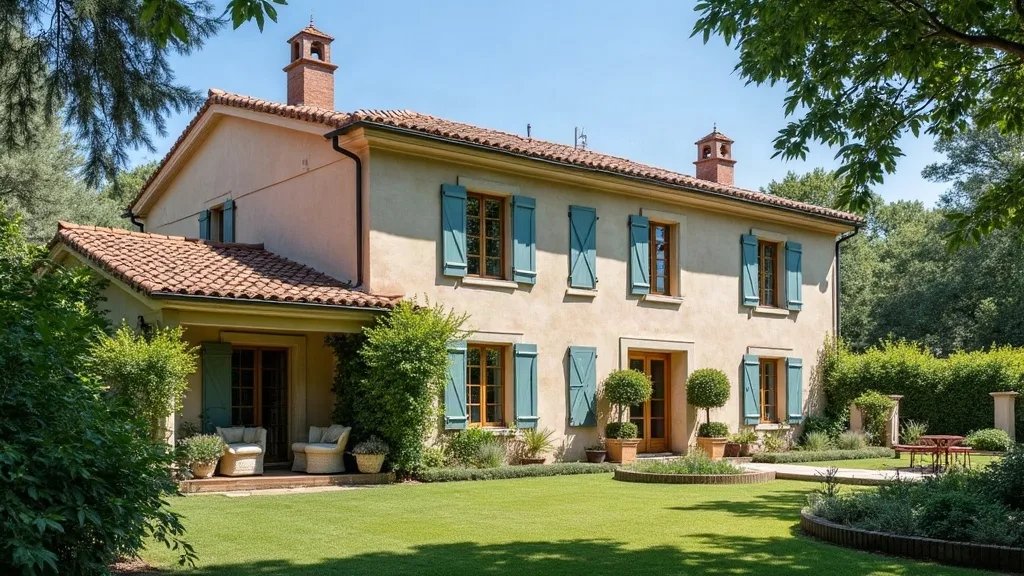
A wall is described as a party wall when it separates two buildings or two properties and belongs equally to each of the neighbouring owners. The presumption of shared ownership is set out in Article 653 of the French Civil Code for dividing walls in towns and in the countryside, unless proven otherwise (title deeds, marks of exclusive ownership, etc.).
- A rebuttable presumption: it can be overturned by indicators such as a coping (the top of the wall) sloping to one side only, pointing to exclusive ownership on the side it overhangs.
- Marks of ownership: corbels, toothing stones left for a future extension, or openings cut into the wall are all indicators against shared ownership.
- Burden of proof: in the event of a dispute, it falls to the owner claiming shared ownership to prove it.
Rights and Obligations of Wall Co-Owners
Each owner of a party wall holds rights of use, but is also bound by strict constraints. In particular, an owner may:
- Build a structure abutting the wall, provided the other owner’s rights are not infringed (Article 657 of the Civil Code).
- Cut openings (windows, light wells) into the party wall, but only with the neighbour’s written consent (Article 675).
- Require a contribution to necessary repairs, in proportion to each party’s respective rights (Article 655).
Conversely, it is forbidden to alter the wall’s structure without prior agreement, to dig foundations on the neighbour’s side, or to use the wall as support for a heavy installation without authorisation. In the event of a dispute, a court-ordered expert assessment is often needed to determine liability and damages.
Right of Way: Basis and Conditions
A right of way is an easement allowing an owner to reach a landlocked parcel (one with no access to the public road) via a neighbouring property. It may arise from an agreement, from a prior common use by the same owner (« destination du père de famille »), or by operation of law (Article 682 of the Civil Code).
- Landlocked parcels: the owner of a landlocked property is entitled to a passage sufficient to ensure full access to their property (housing, farming activity, etc.).
- Route of the passage: it must cause the least possible damage to the servient property, both in terms of route and width (often 3 metres for vehicle access, though this depends on the intended use).
- Compensation: a legal right of way entitles the servient property owner to compensation proportionate to the loss suffered (Article 682, paragraph 2).
In dense urban areas such as Nice or Toulon, rights of way are common for second-row properties within a condominium. It is essential to check for an existing easement in the notarial deeds before any transaction.
Easements: Establishment, Extinction and Exercise
Easements (rights of way, rights to a view, drainage rights, etc.) are established by title (notarial deed), by prior common use by the same owner, or by thirty-year prescription (for continuous and apparent easements). Their exercise is governed by Articles 701 et seq. of the Civil Code.
- Limited use: the owner of the dominant property may only use the easement in accordance with its title, without increasing the burden on the servient property.
- Maintenance: maintenance works needed for the easement’s use are borne by the dominant property, unless otherwise agreed.
- Extinction: an easement lapses after 30 years of non-use, when the two properties are merged under single ownership, or when the structures that gave it physical form are destroyed.
In the event of a dispute over the scope or existence of an easement, a topographical and legal expert assessment is essential. Bringing in a planning expert makes it possible to physically mark out the boundaries and check that constructions comply.
Expert Assessment: A Tool for Prevention and Resolution
Faced with these issues, the involvement of a building and land surveying expert is often decisive. Our assignments across the Alpes-Maritimes and the Var include:
- Amicable or court-ordered boundary surveys to establish property lines.
- Review of title deeds and cadastral plans.
- Verification of party wall status and assessment of each owner’s rights.
- Review of rights of way and the conditions governing their exercise.
- Drafting of adversarial expert reports for use in court.
Whether you are in Antibes, Cannes, Grasse, Nice or Toulon, an expert assessment carried out before a property purchase or a building project spares you costly disputes and unforeseen delays.
Conclusion: Plan Ahead with Cassini Expertise
Party walls, boundary walls and rights of way are technical matters that call for a rigorous approach. In the Alpes-Maritimes (06) and the Var (83), local specifics — high density, terrain, condominiums — make expert assessment all the more valuable. Contact Cassini Expertise on 04 22 46 06 04 for a quote covering both the 06 and 83 departments. We respond quickly to secure your projects and resolve your disputes.
📅 Updated on 21/08/2026 — By Cassini Expertise, independent building expert covering the 06 & 83 departments. Free quote: 04 22 46 06 04.
To learn more:
Frequently Asked Questions
What Setback Distance Is Required to Build on a Property Boundary?
As a general rule, the local zoning plan (PLU) requires a minimum setback of 3 metres from the boundary line, except where building against a party wall or with the neighbour’s agreement. In the 06, some municipalities apply stricter rules, so check with the local planning department.
How Do You Know If a Wall Is a Party Wall?
A wall is presumed to be a party wall if it separates two properties and no title deed states otherwise. You can check the notarial deeds or the cadastral plans. If in doubt, a surveyor can carry out a boundary survey.
What Right of Way Applies to a Landlocked Parcel?
The owner of a landlocked plot is entitled to a passage over neighbouring properties to reach the public road, under Article 682 of the French Civil Code. The route must be the shortest and least damaging possible, and compensation is owed to the owner of the servient property.
Cassini Expertise
Expert du bâtiment indépendant — Antibes (06·83·13·40)
📅 Mis à jour le 25/09/2026 — Cassini Expertise, expert bâtiment indépendant (06·83·13·40).